








Big Sur, California, is a stretch of coastline unlike any other – a place where rugged cliffs plunge dramatically into the Pacific Ocean, creating a landscape of unparalleled natural beauty and formidable challenges for architecture. Building in such an environment requires a profound respect for nature and a design approach that seeks to complement, not conquer, the terrain.
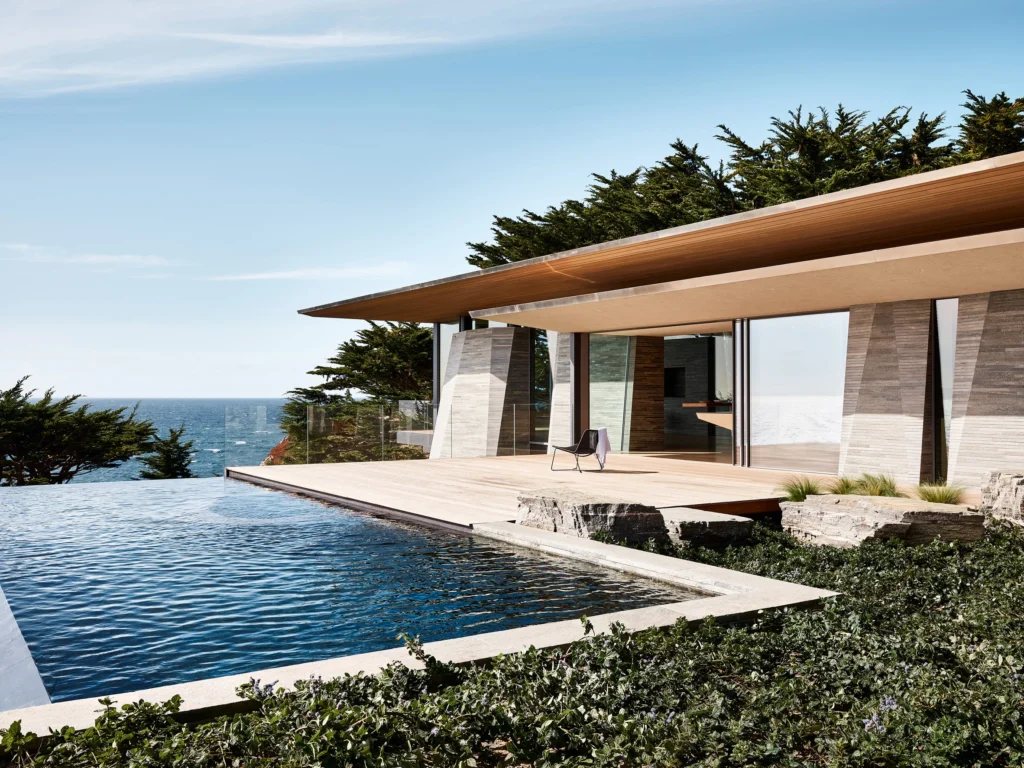
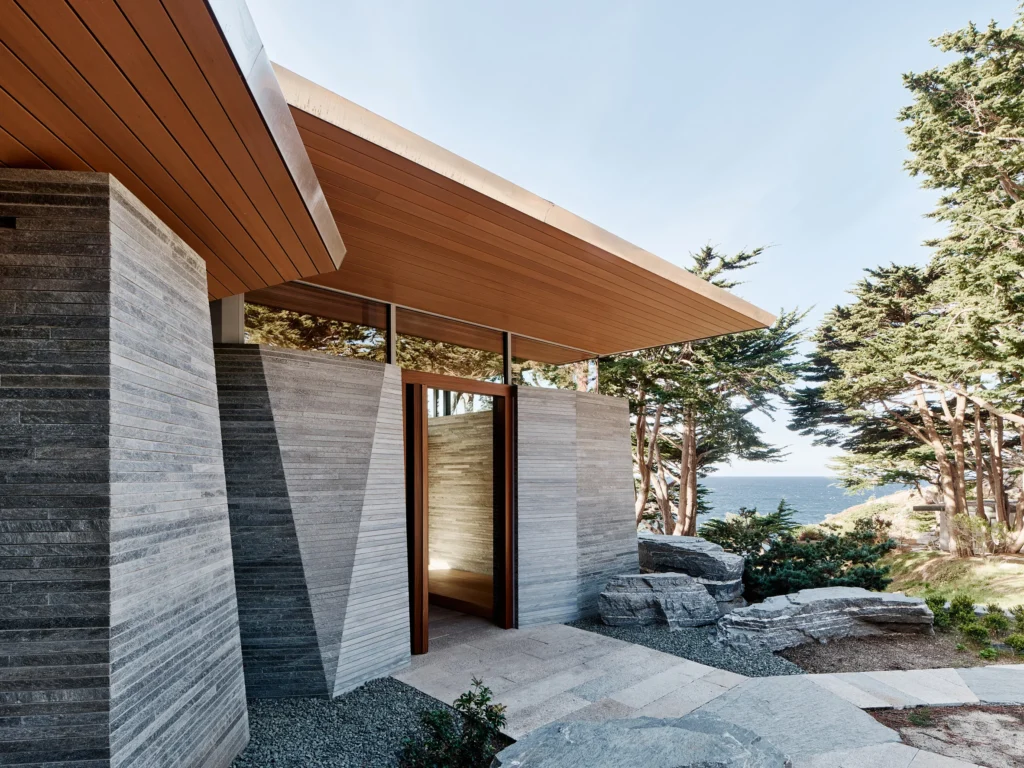
The Big Sur House, a stunning creation from US studio Field Architecture, embodies this philosophy entirely. Perched on a rugged peninsula and designed explicitly to “bring the residents closer to nature with every turn,” this home is a masterclass in integrating structure with a dramatic natural setting.
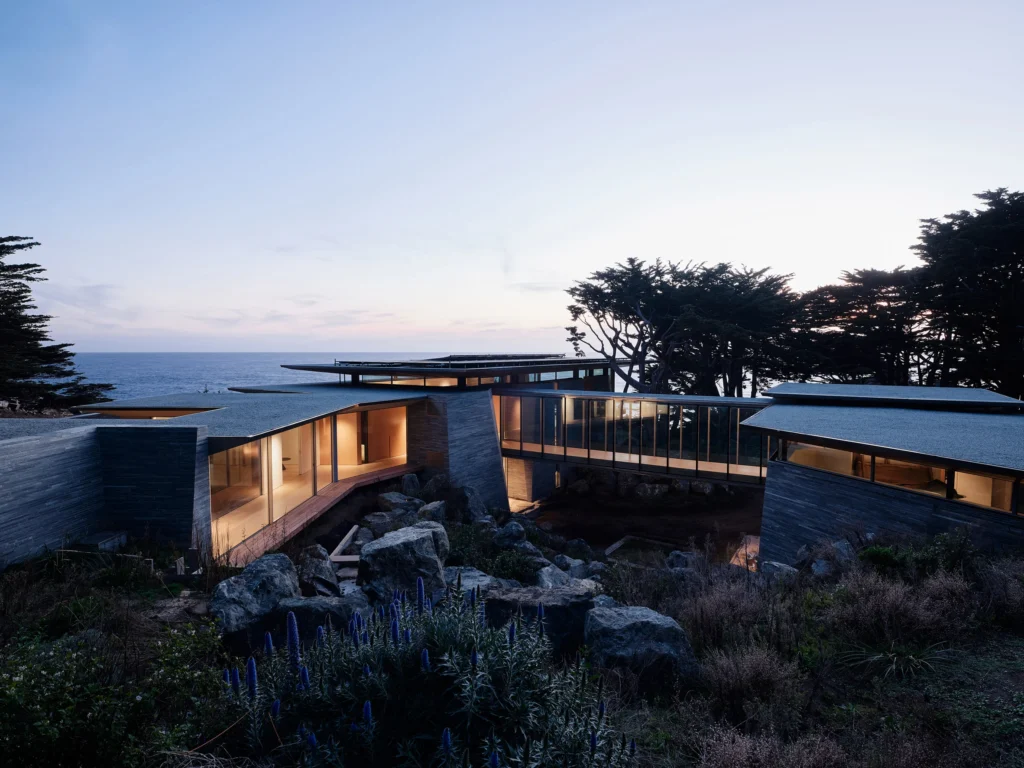
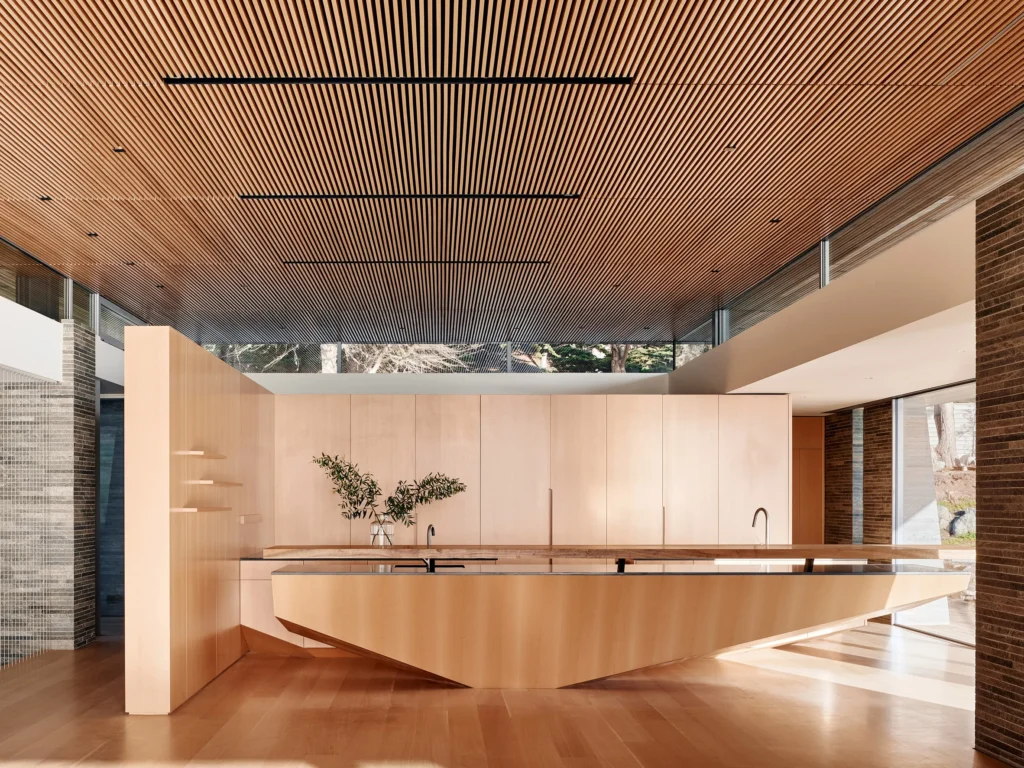
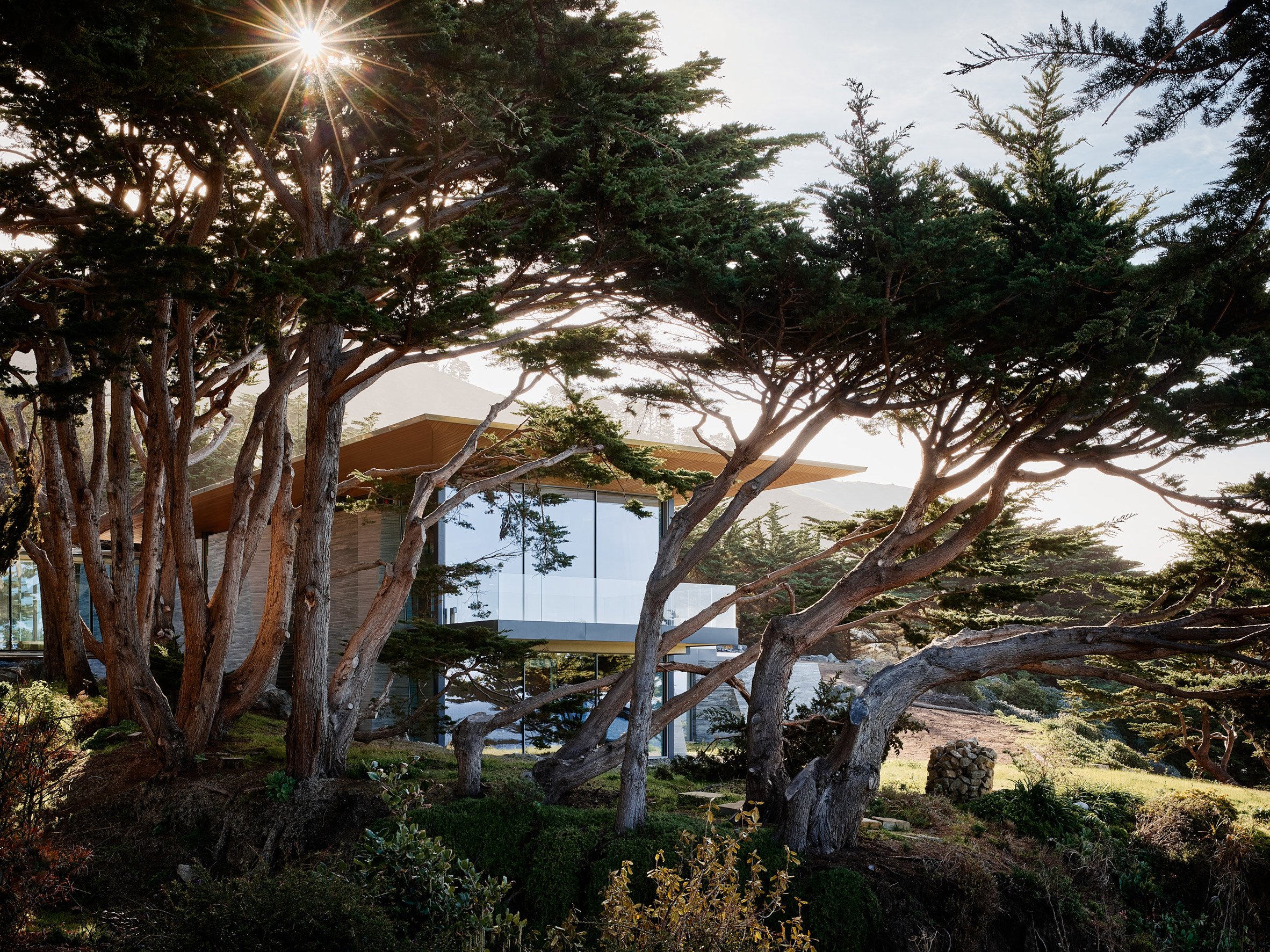
The site itself dictated much of the design. It features the iconic cypress trees of the region and is bisected by a ravine that winds its way down toward the ocean – a natural feature that becomes central to the home’s composition. The Big Sur House consists of a collection of volumes thoughtfully set around this ravine.
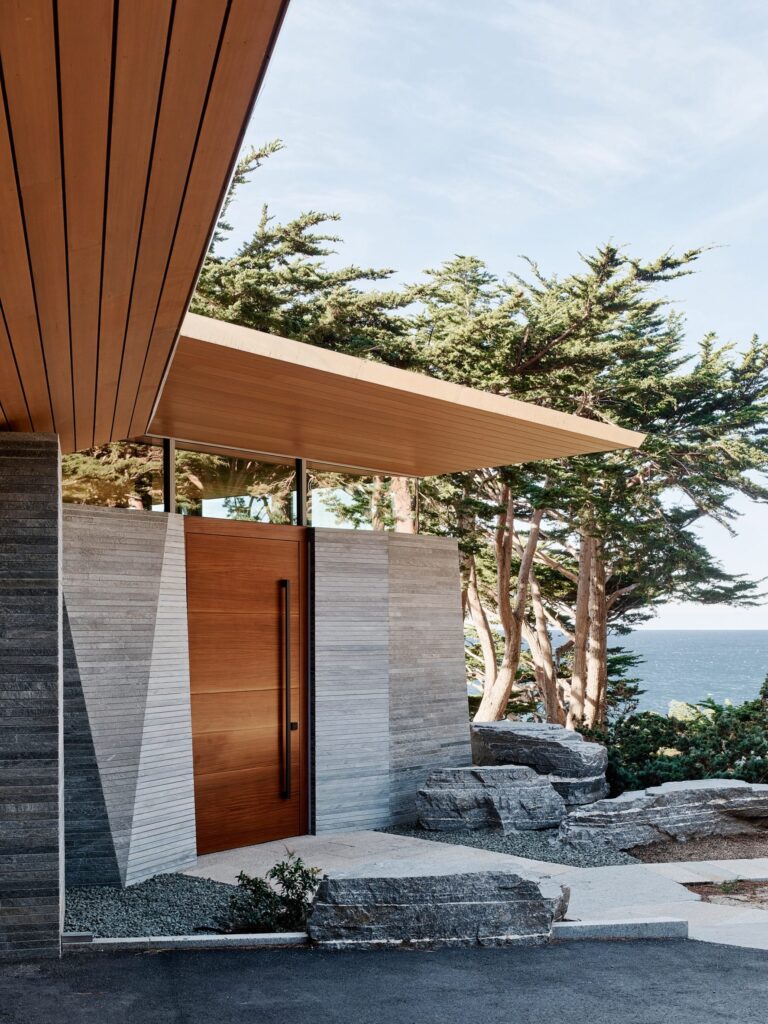
Intriguingly, the ravine itself divides the home into two distinct parts: on one side sits a traditional Japanese entrance pavilion, known as a genkan, while the main house occupies the other. The connection between these two portions is a striking architectural moment – a glass-enclosed bridge that gracefully traverses the ravine, creating a seamless yet dramatic link across the natural divide.
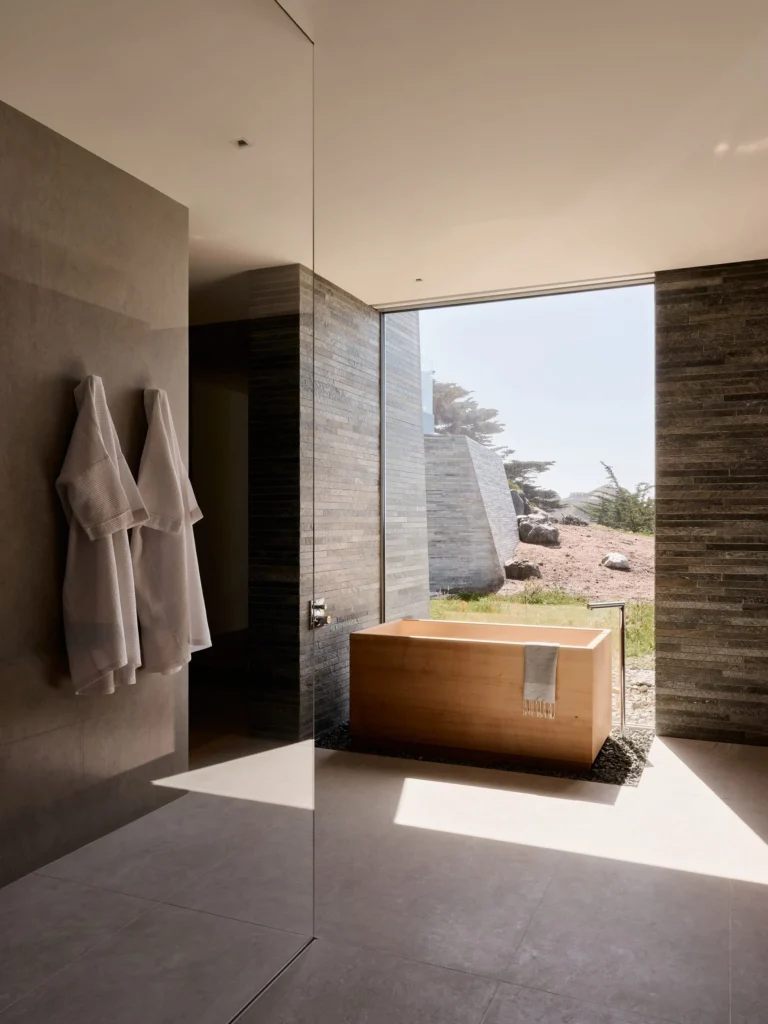
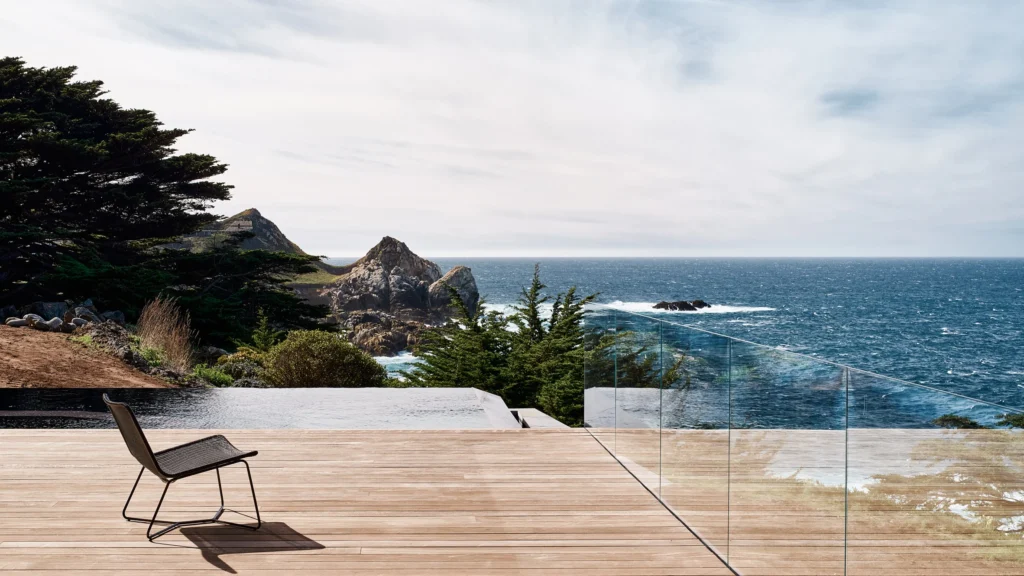
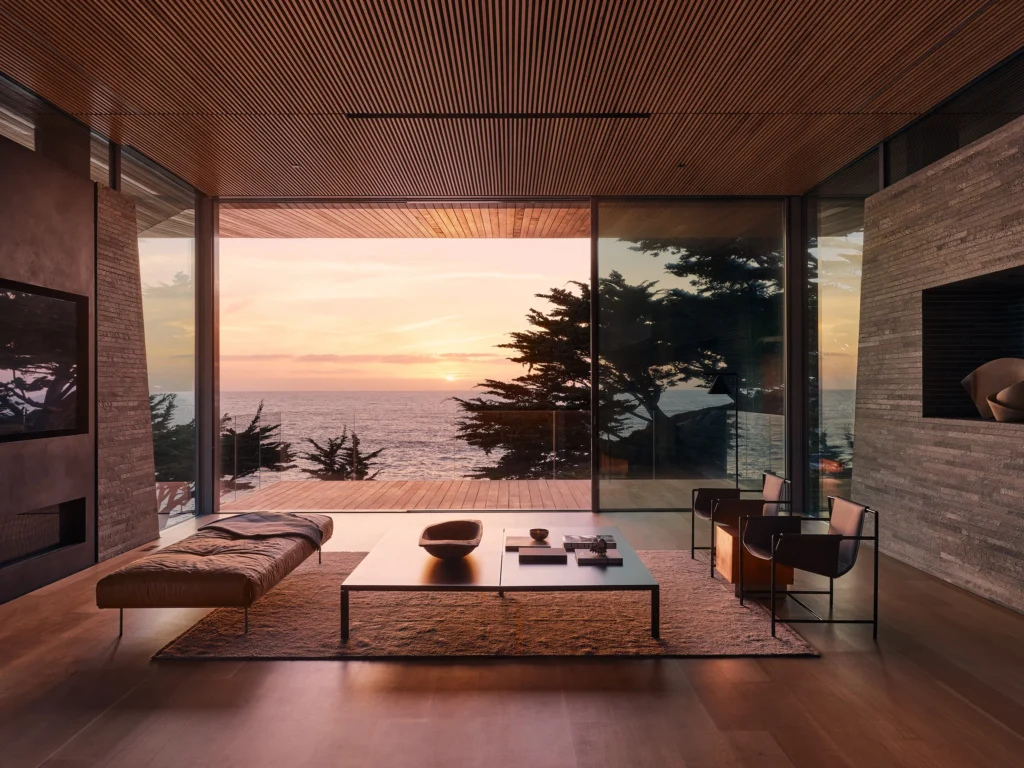
The main house rises two levels, and its orientation is key to maximising the site’s potential. The western portion opens up dramatically, featuring vast stretches of glass designed to frame and maximise the incredible views of the Pacific Ocean – embracing the panoramic coastal vista. In contrast, the eastern portion of the house burrows more deeply into the site, containing more sheltered and private rooms, providing a sense of refuge balanced against the openness of the western side.
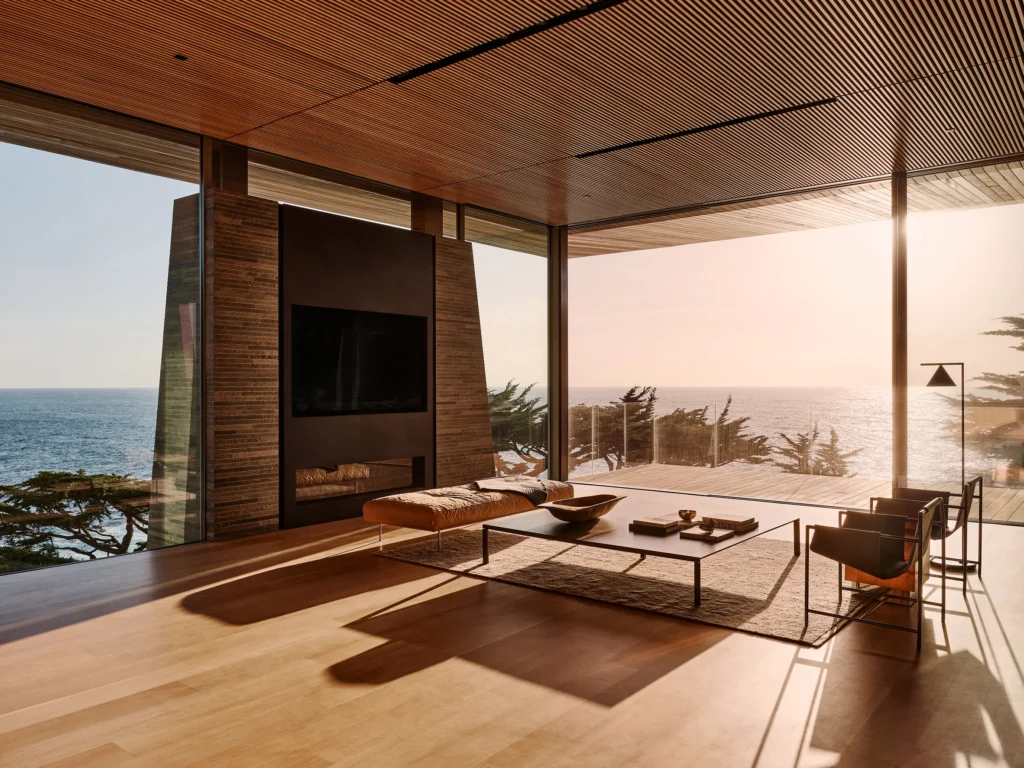
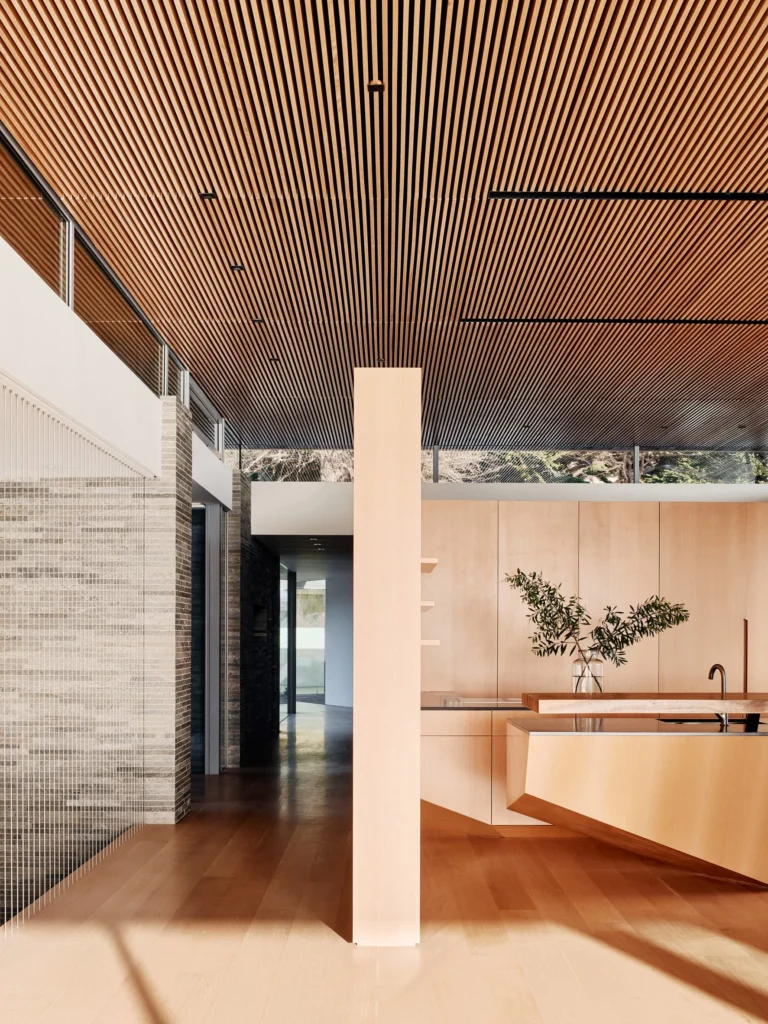
Indoor and outdoor living are intrinsically linked; a centrally placed kitchen adjoins a terrace and an infinity pool, creating a seamless flow outward towards the view and the water. Within the kitchen, a sculptural island serves as a functional centrepiece, its form thoughtfully alluding to the organic shapes found in the surrounding nature.
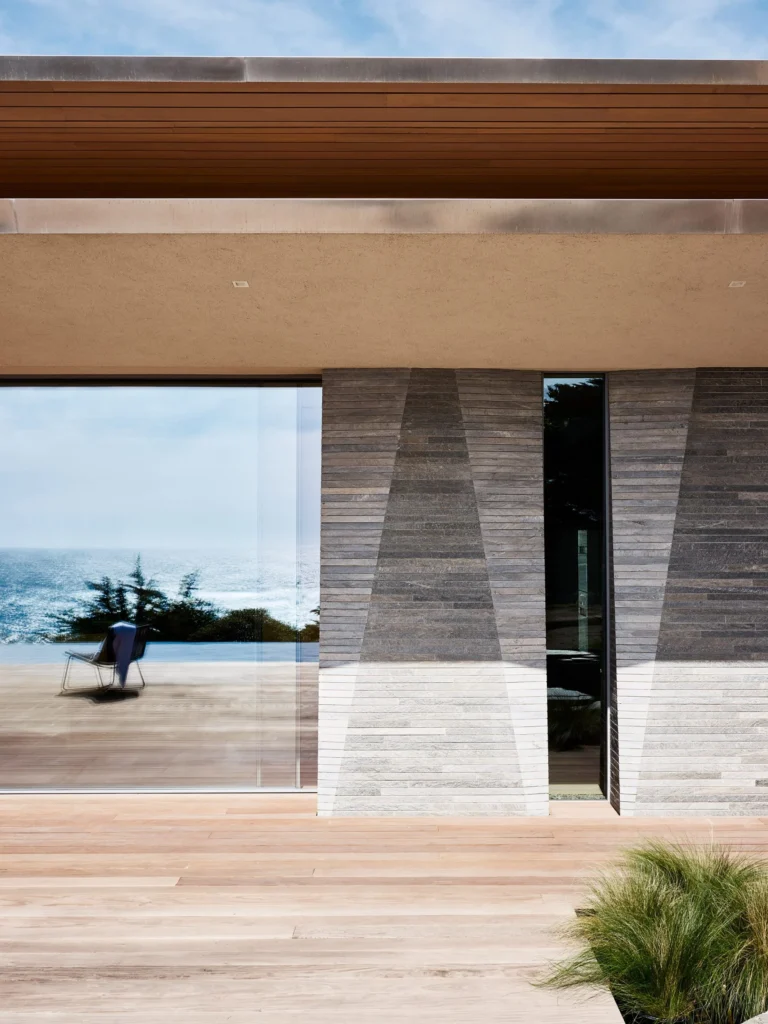
Materiality plays a crucial role in grounding the house within its environment. Facades are clad in quarried limestone laid in thin courses, a direct and beautiful reference to the striations visible in the region’s cliffs, visually connecting the structure to the geology. Faceted walls are designed to resemble chiselled rocky outcrops, further blending the architecture visually with the rugged landscape. Large stretches of glass are used not just for the immersive views but also to usher in abundant daylight, enhancing the connection to the natural world.
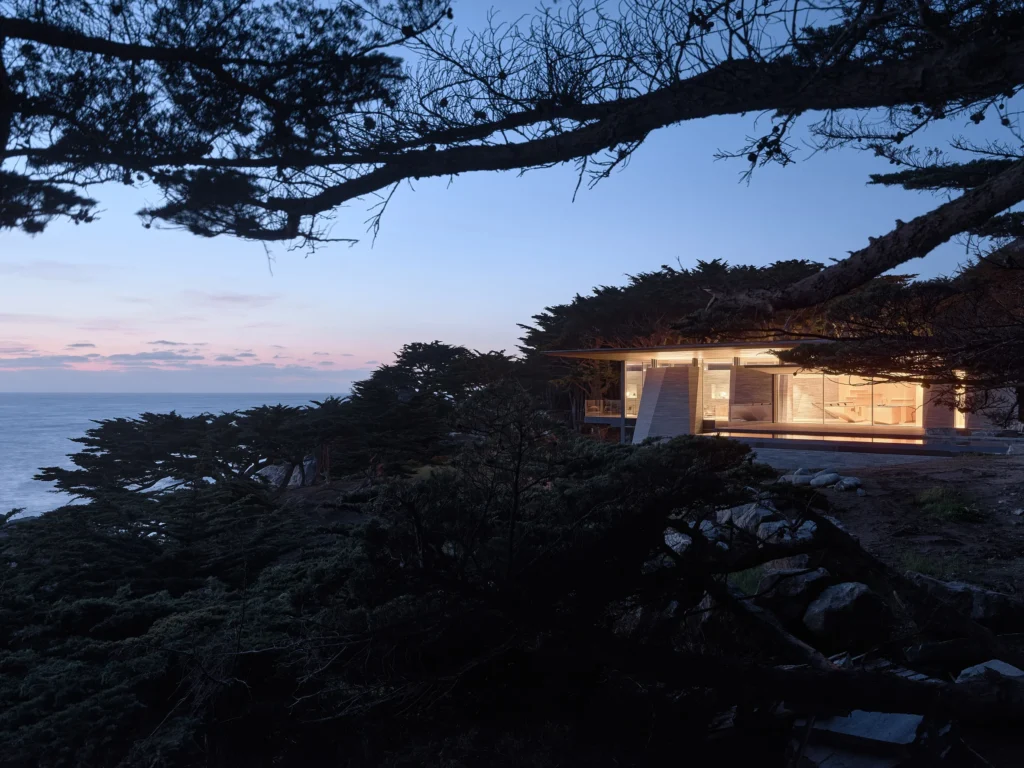
Teak was also used for the deck areas and the engawa – a wooden or bamboo ledge along the outside edge of traditional Japanese buildings – which runs along the northern elevation of the main house facing the ravine, incorporating subtle Japanese architectural elements and linking the home to another natural feature of the site. A thin roof plane extends beyond the building, providing practical protection from the elements while maintaining a clean, modern profile.
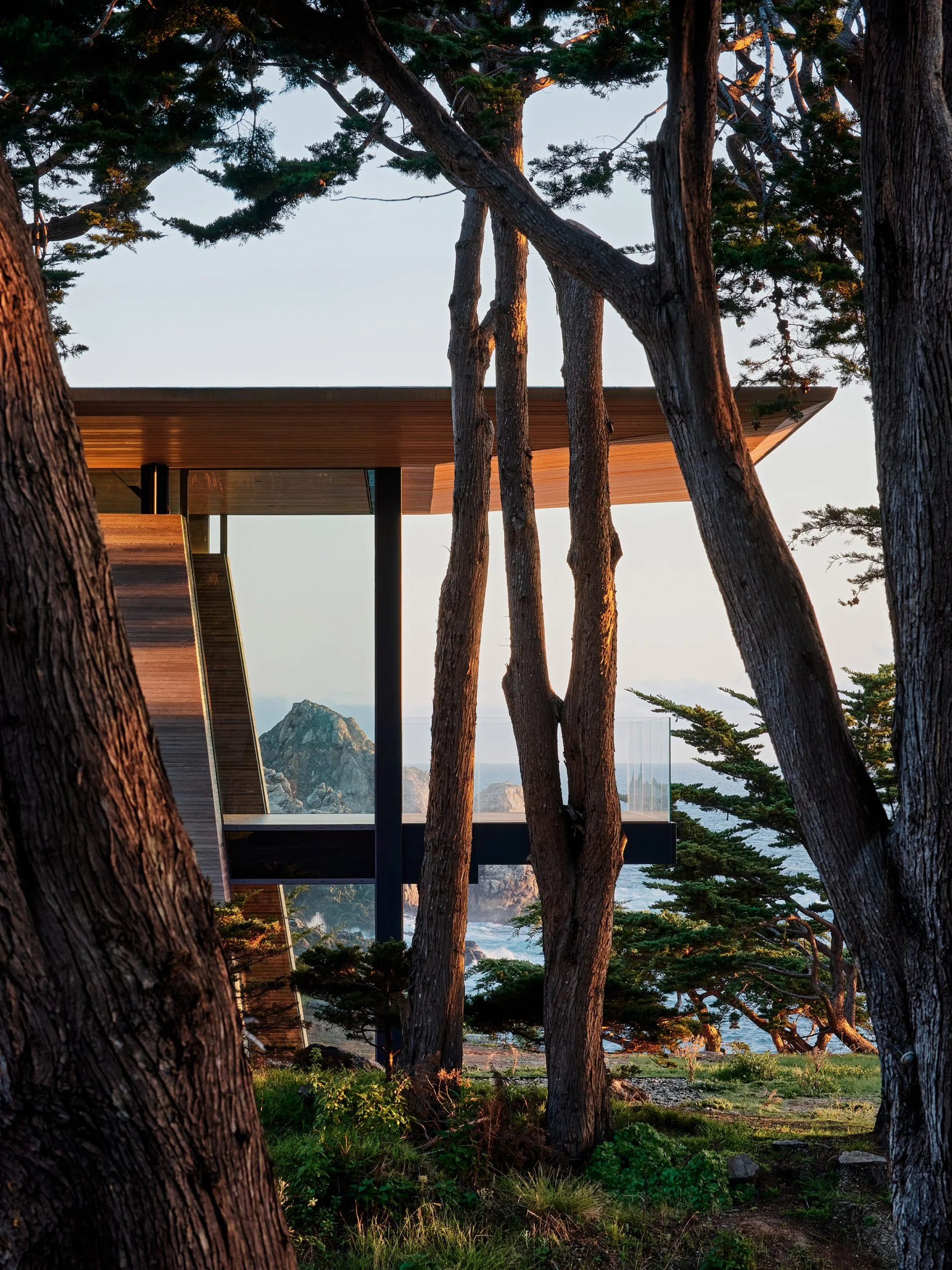
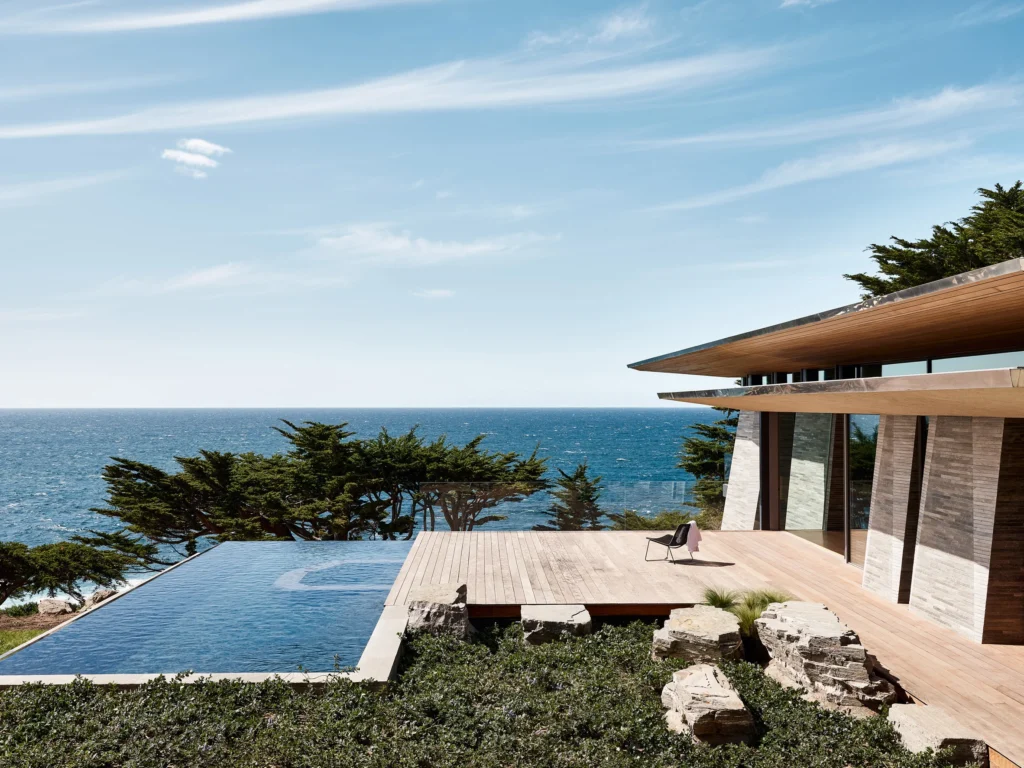
The Big Sur House by Field Architecture is a remarkable piece of architecture that responds intelligently and beautifully to its challenging, dramatic coastal site, blending modern design with natural materials and subtle Japanese influences to create a home that is deeply connected to its environment and maximises the incredible views. It stands as a stunning example of building with nature.

- All-Terrain Escapism: Wilde Bikes Supertramp - September 17, 2026
- Driven by Tension: AG/NS Performance Apparel - September 17, 2026
- Minimalist Luxury Utility: The Bennett Winch Supply Tote - September 17, 2026