







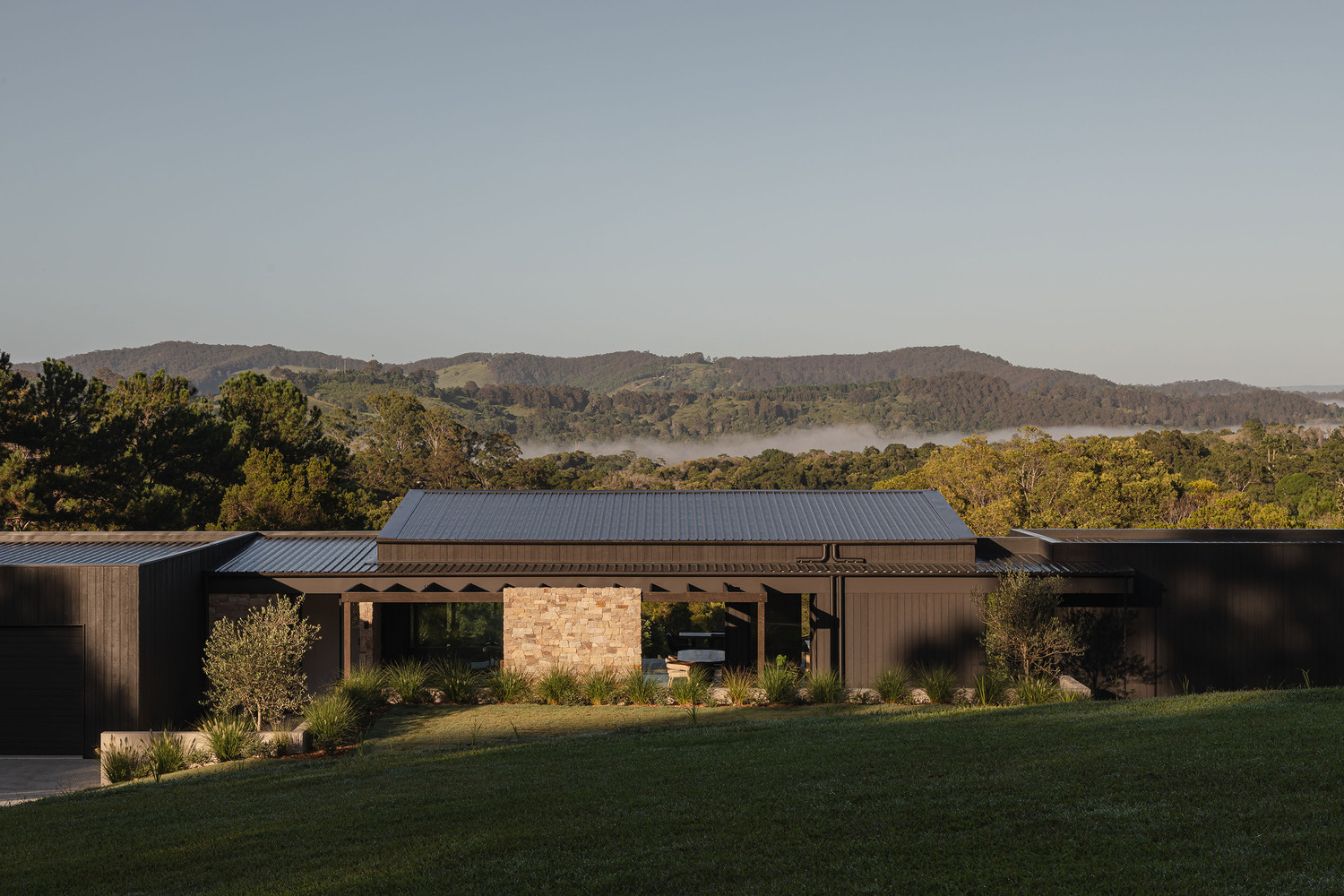
There is a distinct kind of architectural magic that occurs when a residential build is designed not to dominate its surroundings, but to quietly, respectfully coexist with them.
Achieving this delicate balance requires a deep understanding of the land and a masterful sense of restraint. Born from a shared appreciation between the client and the brilliant minds at Hive Architecture for an extraordinary natural landscape, Pomona House is an absolute triumph of contextual design.
The ambition behind this project was straightforward yet profoundly meaningful: to create a home defined by careful craft and quiet confidence. It is a residence that fundamentally belongs to its rugged setting, rather than imposing itself upon the earth.
Sited for Serenity
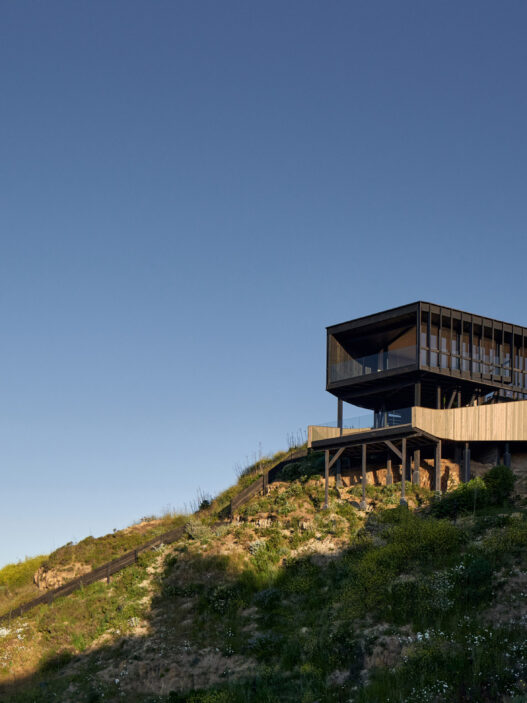
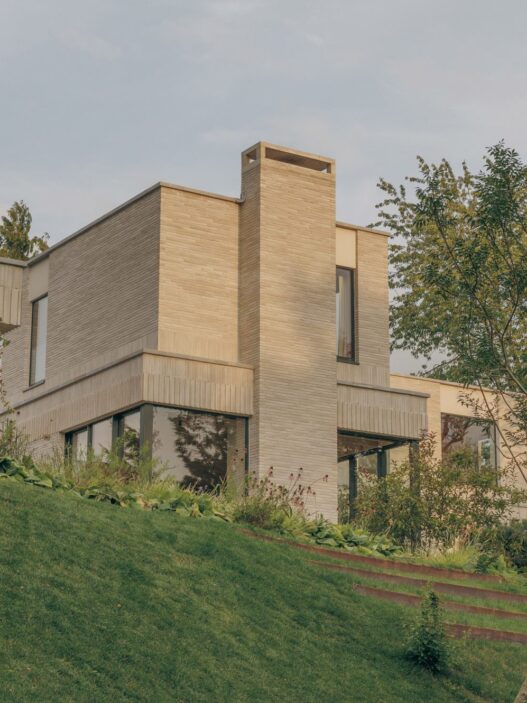
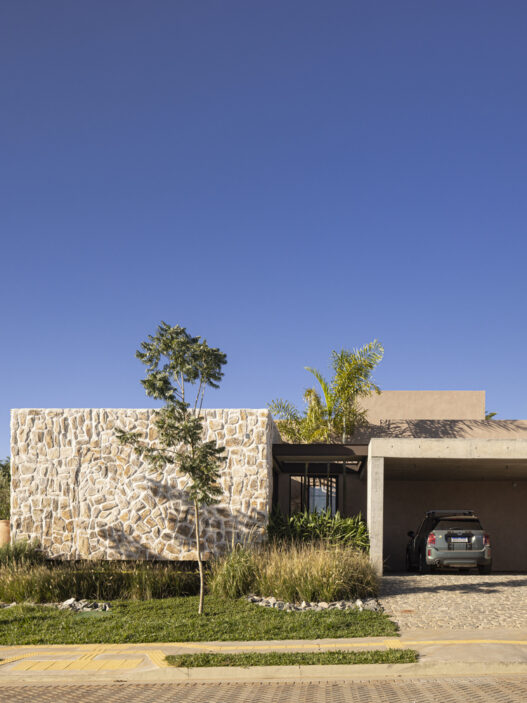
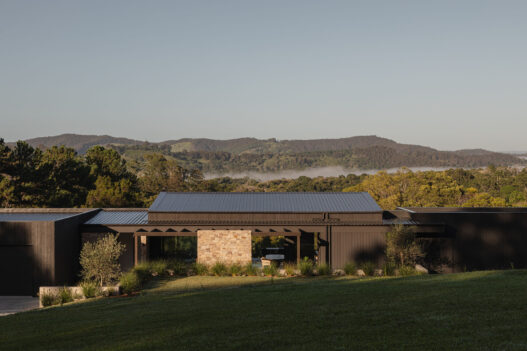
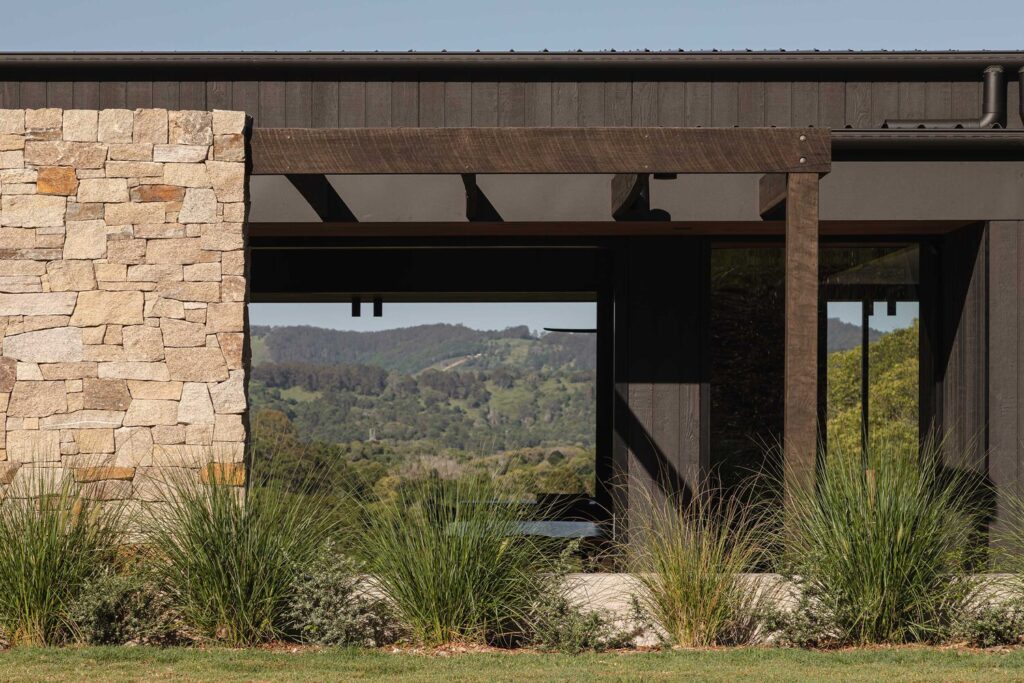
To truly appreciate the architectural success of Pomona House, you have to look at how it physically occupies the site. The residence is deliberately set far back from the street, an intentional move that instantly establishes a profound sense of privacy while allowing the structure to find its natural, organic position along the site’s rolling ridgeline.
Rather than flattening the earth to accommodate the build, the home was meticulously sited to sit comfortably alongside the natural slope of the terrain.
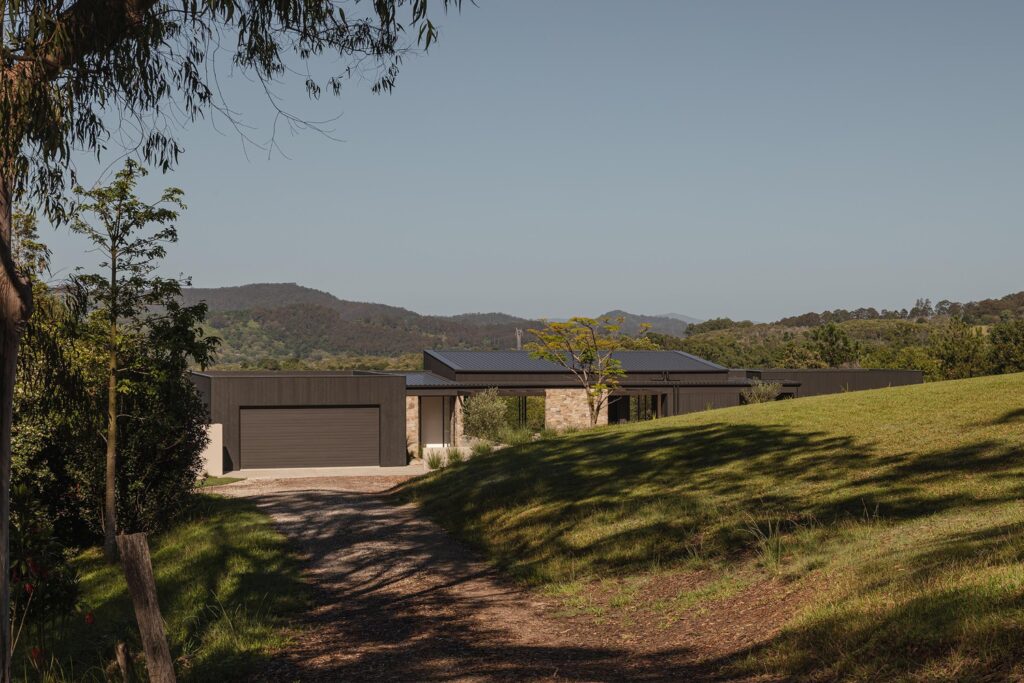
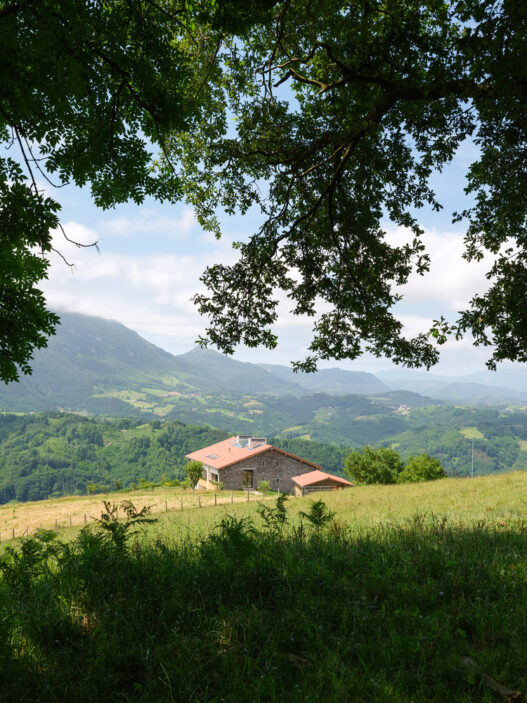
Crucially, the entire floor plan is oriented to capture and engage the most generous, breathtaking views toward the Hinterland. These lush, sweeping vistas essentially become the quiet protagonist of every single room, organically guiding the visual experience as you move through the property.
Dissolving the Boundaries
Modern architecture often talks about bringing the outdoors in, but Hive Architecture has executed this concept with phenomenal fluidity.
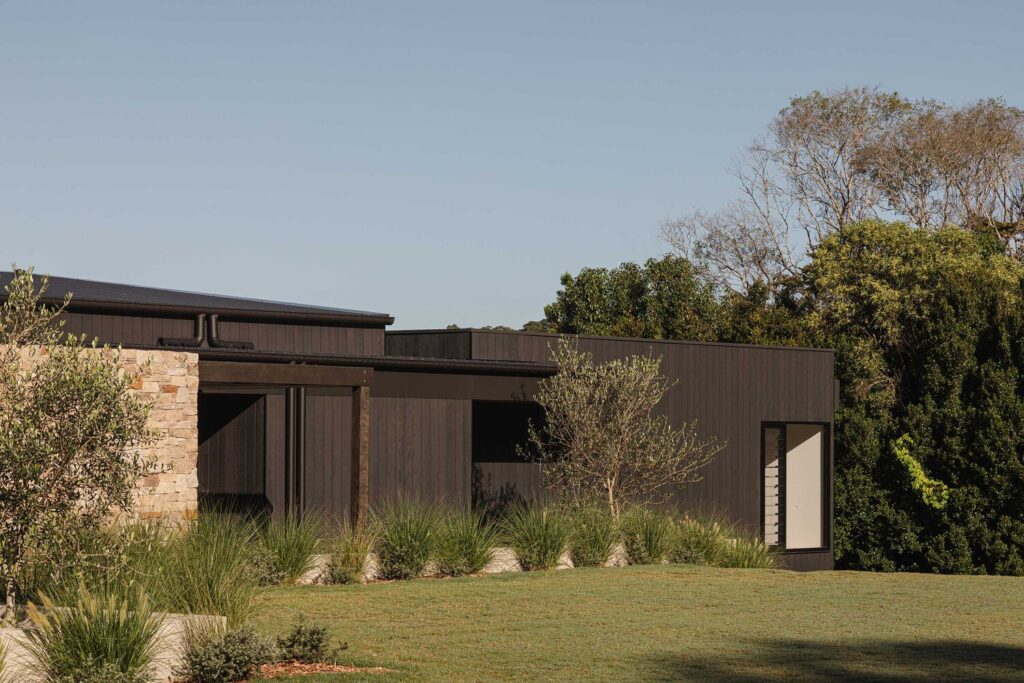
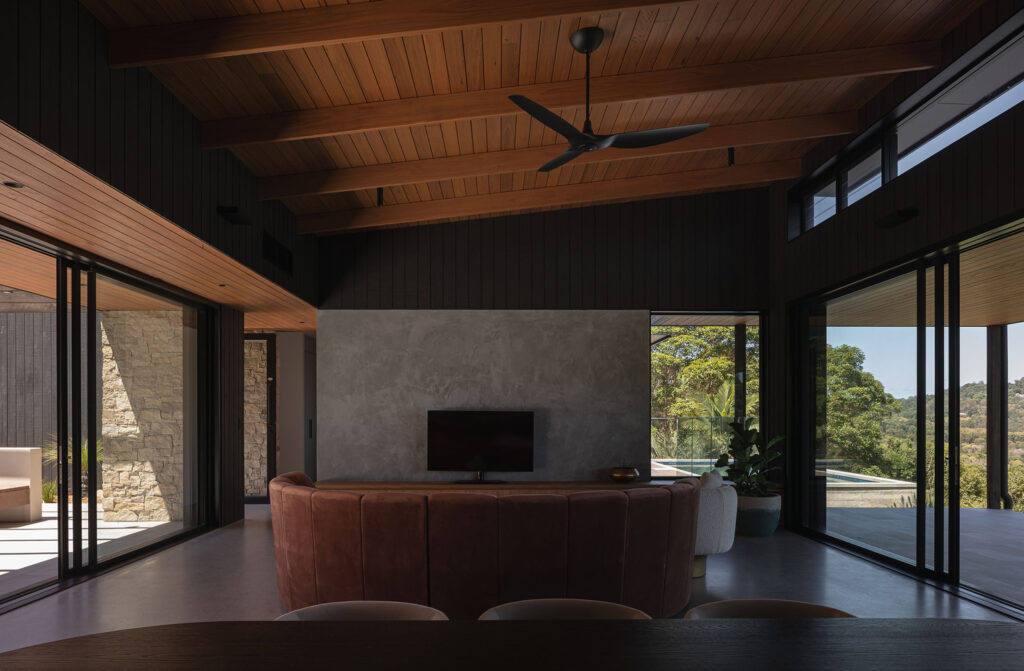
At the absolute heart of the floor plan, the home completely opens up on both sides, effectively dissolving the traditional boundaries between the interior living quarters and the untamed exterior.
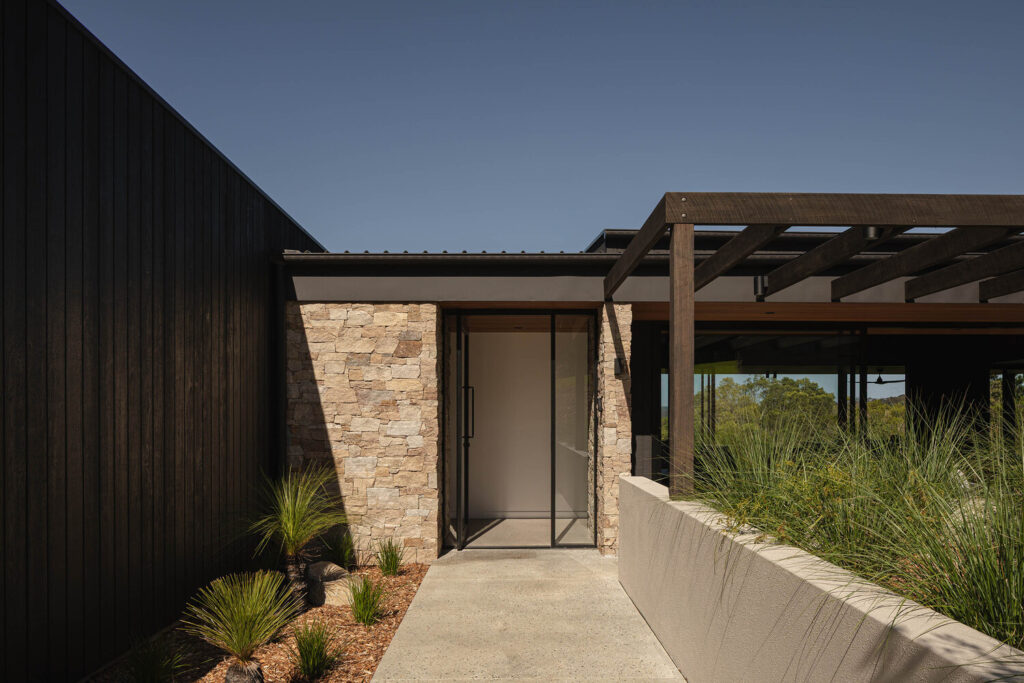
To anchor the home to its environment, the architects implemented a robust palette of raw, natural materials throughout the interior spaces.
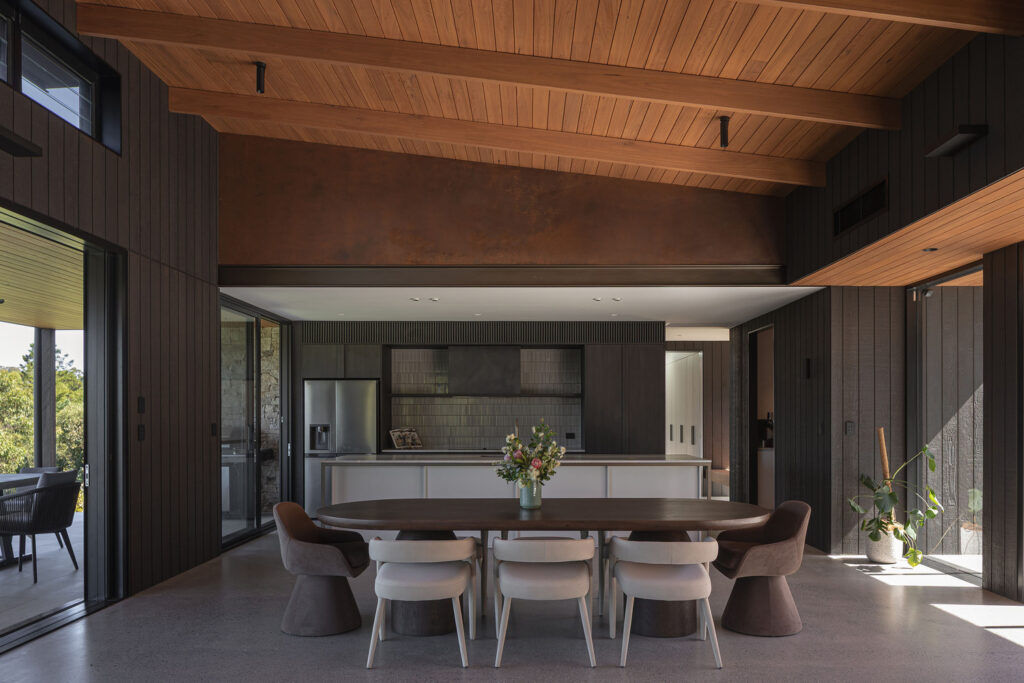
This tactile selection grounds the property, lending the living areas a calm, unhurried character that feels beautifully continuous with the wild land stretching out beyond the glass.
A Masterstroke in Spatial Flow
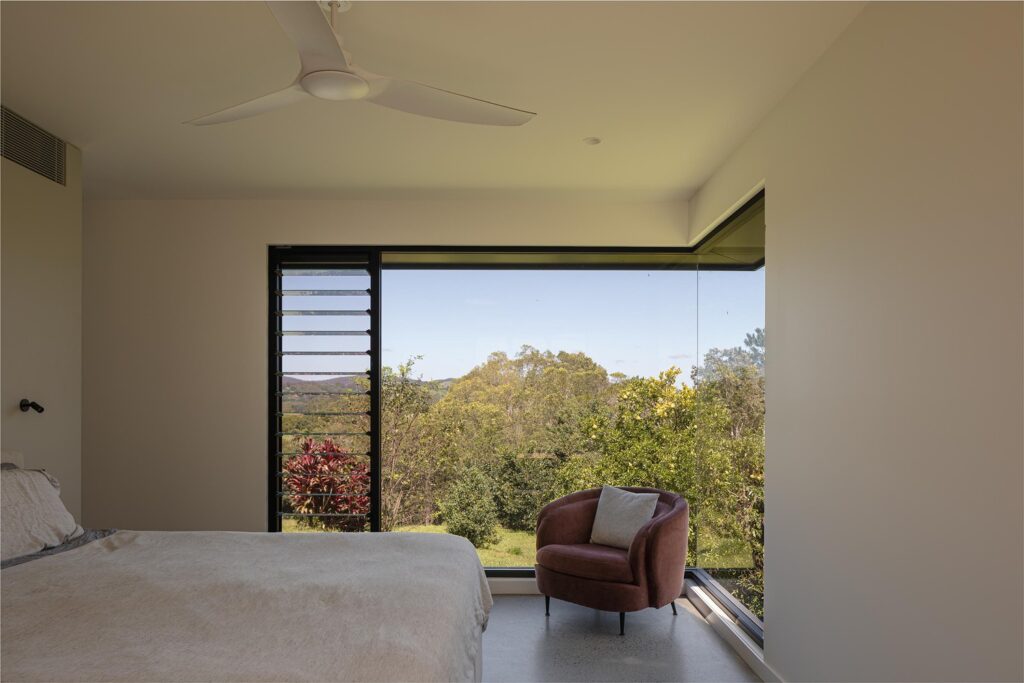
The clever spatial organization continues into the private quarters. The luxurious master suite occupies one far end of the home, purposefully separated from the bustling main living areas by a stunning glazed corridor.
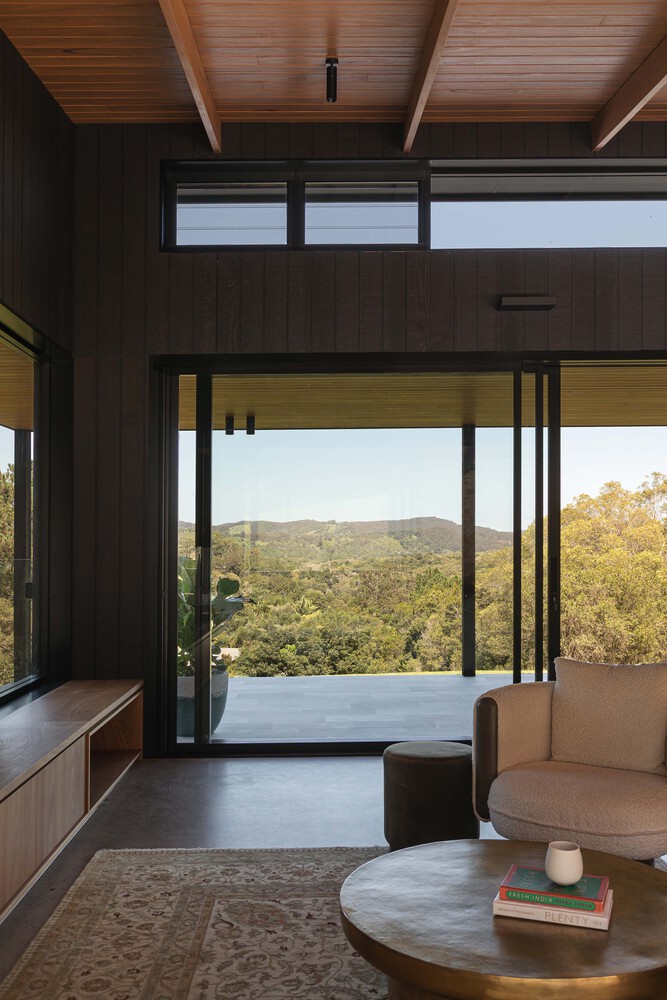
This glass walkway acts as a deliberate, physical break in the built form. However, this interstitial space is far more than a simple threshold or hallway.
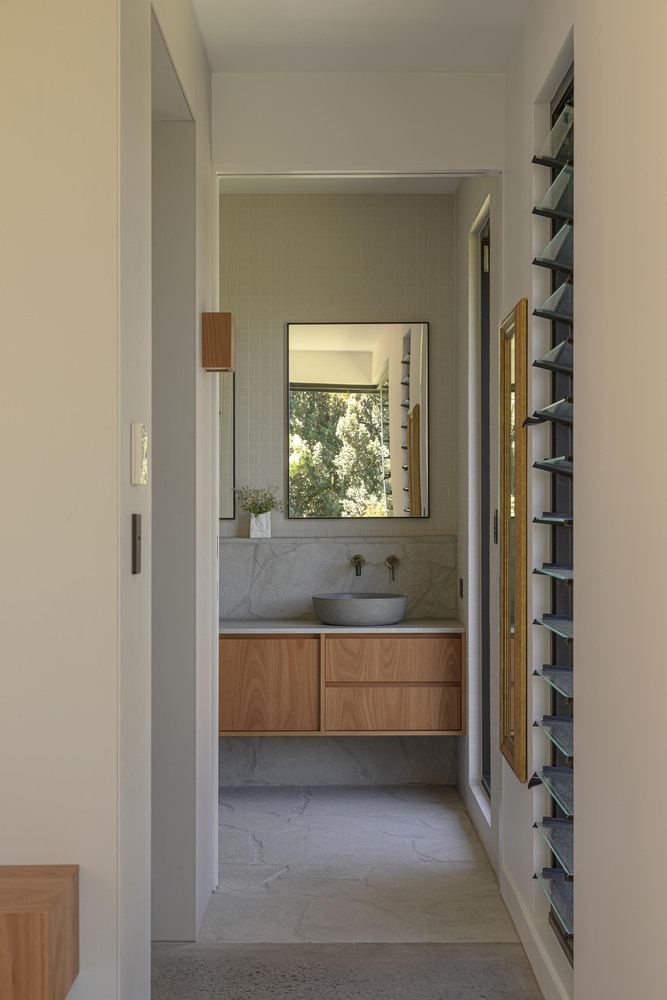
It actively intensifies the daily experience of moving through the house, forcing the residents to pause and drawing the surrounding natural environment into a much closer, intimate dialogue with their daily routine.
Elevated Outdoor Living
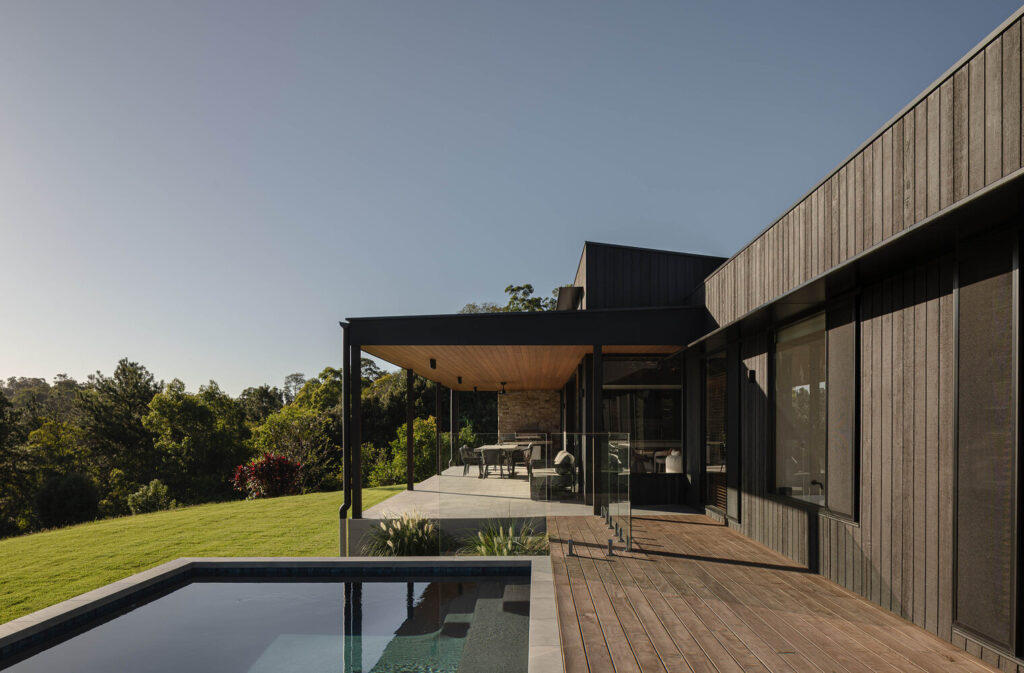
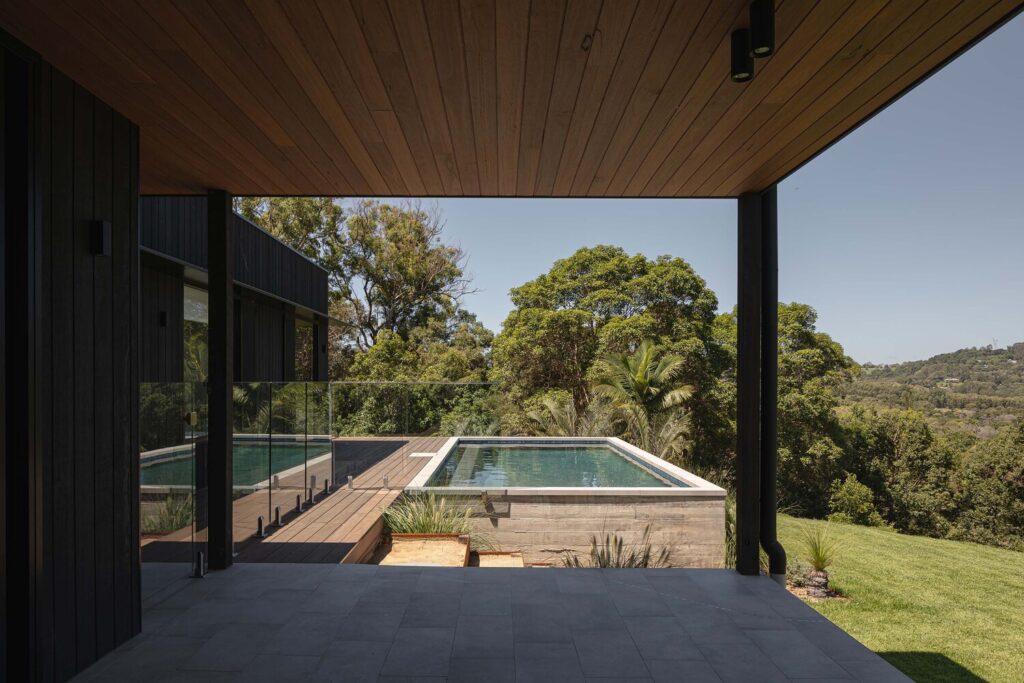
No Hinterland retreat is complete without a brilliant outdoor entertaining setup, and Pomona House delivers this in spades.
To the rear of the property, a series of connected outdoor spaces and a phenomenal swimming pool—expertly finished in raw, highly textured board-formed concrete—are positioned in careful alignment with the main house. Elevated slightly within the landscape, it provides a perfect vantage point.
Completing this masterful sequence of spaces is a cozy fire lounge situated adjacent to the main entry. This specific spot was designed to frame a direct, uninterrupted view straight through the home and out to the Hinterland beyond.
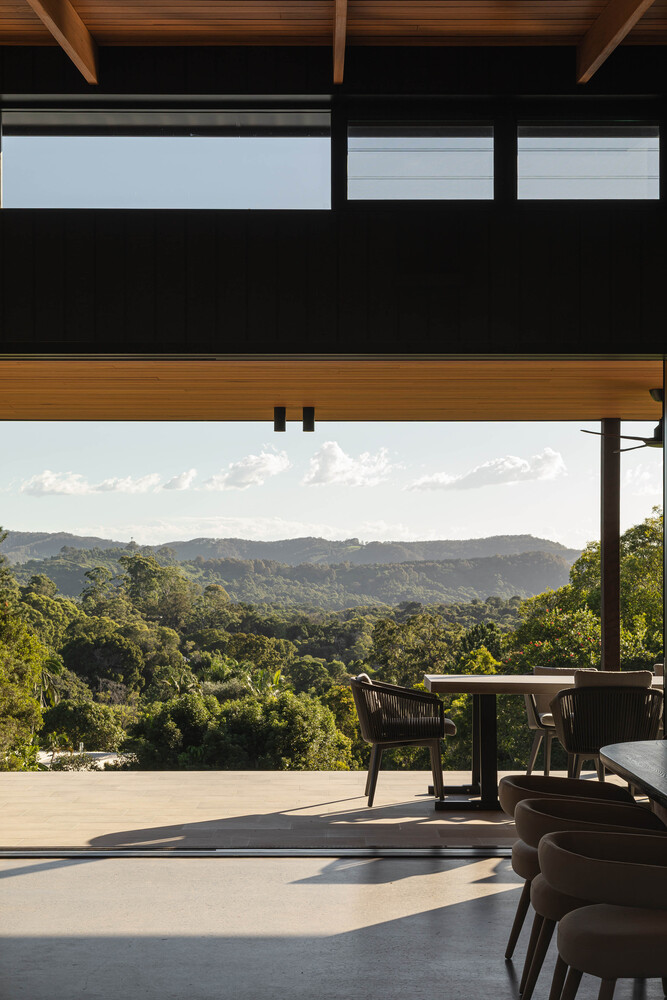
Ultimately, this brilliantly layered sense of openness and spatial flow has gifted Pomona House with a palpable, enduring stillness—a rare quality that was the ultimate ambition of the project from day one, and one that Hive Architecture should be immensely proud of achieving.

- Pop Culture Royalty: The 1996 McLaren ‘Pop Art’ F1 GTR - July 27, 2026
- Trail Ready, Work Proved: Georgia Boot Men’s TrailPoint Hiking Boot - July 27, 2026
- Flame-Forged Legend: The YETI® Cast Iron Skillet 14 - July 27, 2026