






If you appreciate breathtaking residential architecture that seamlessly blends historical heritage with cutting-edge sustainable engineering, the Hamptons has a spectacular new addition to admire.
Designed by the visionary New York-based firm Khanna Schultz Studio, The House in Amagansett is a masterclass in contextual design and eco-conscious luxury.
Created as a weekend retreat for a philanthropist who spent several decades living in Japan, this stunning dwelling serves as a peaceful, design-forward sanctuary that reflects a life lived abroad while offering an idyllic escape for family gatherings in one of Long Island’s most exclusive hamlets.
The Art of Gradual Revelation
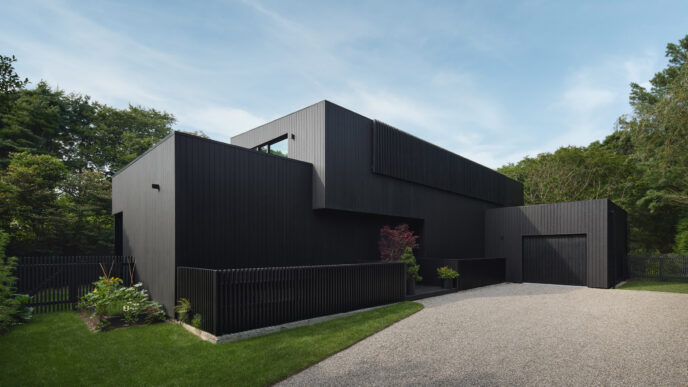
The aesthetic direction of the home draws deeply from traditional Japanese architecture, an influence that is immediately apparent from the curb.
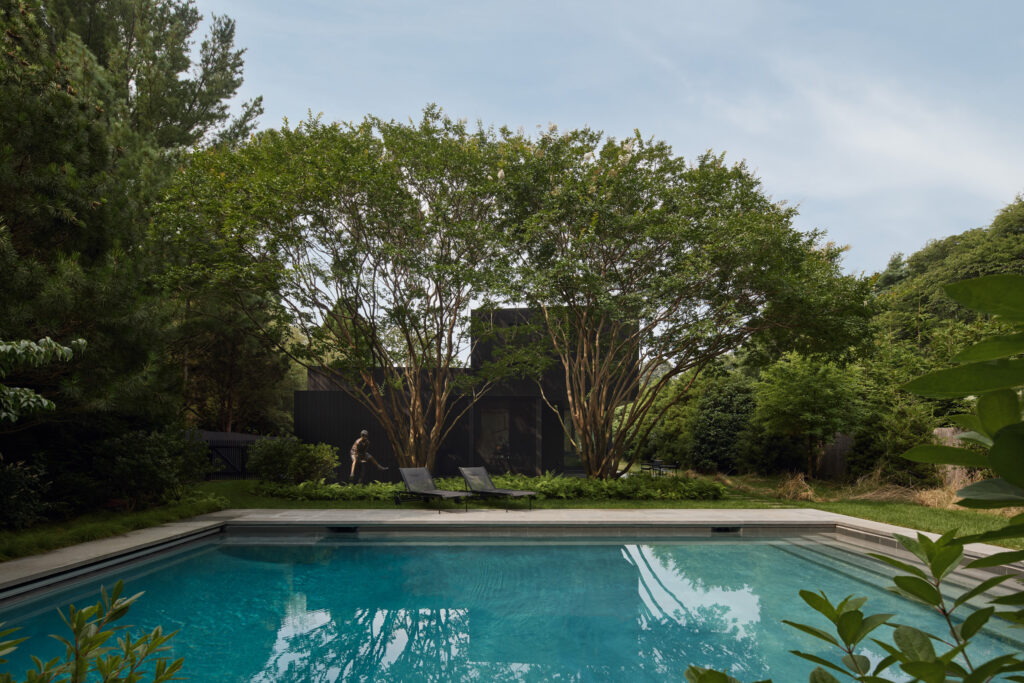
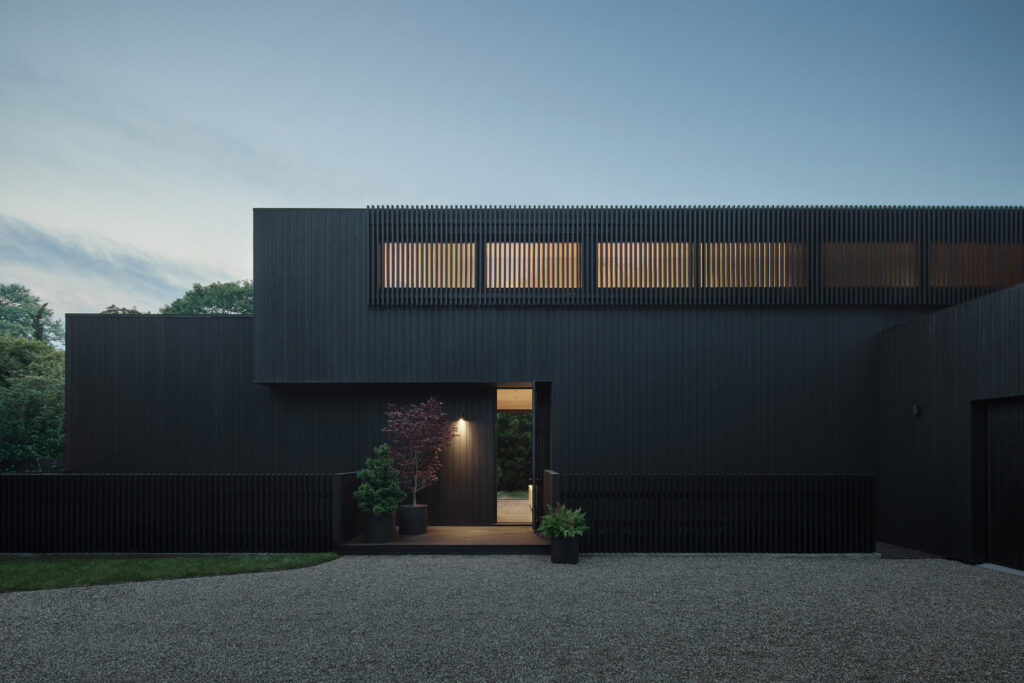
Khanna Schultz embraced the Japanese philosophy of miegakure, or “gradual revelation,” letting the property unfold slowly to visitors rather than showcasing everything at once.
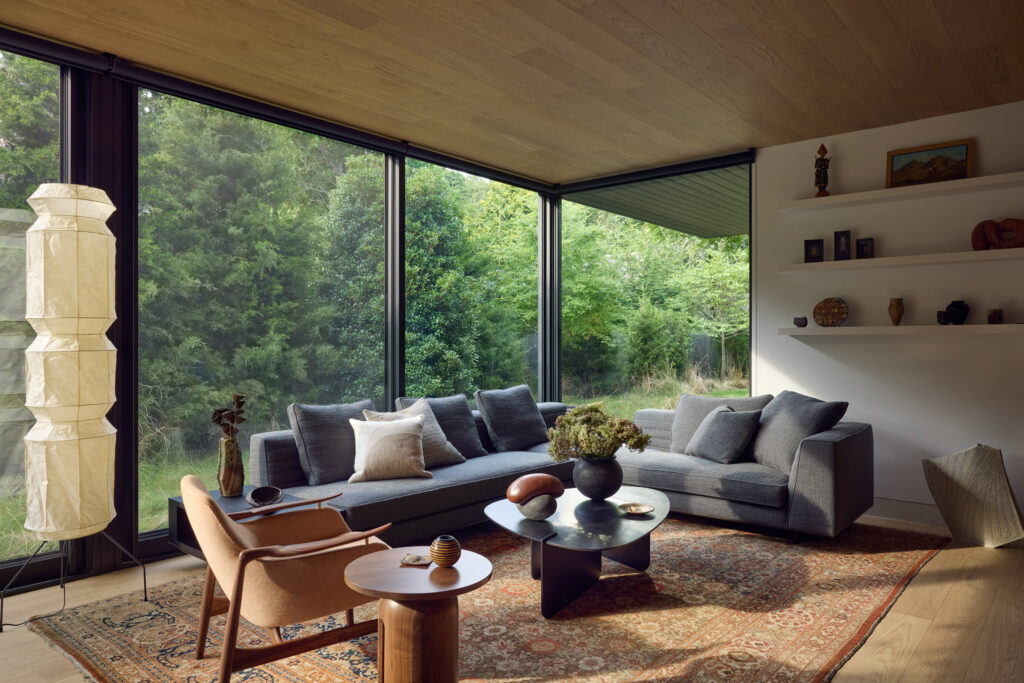
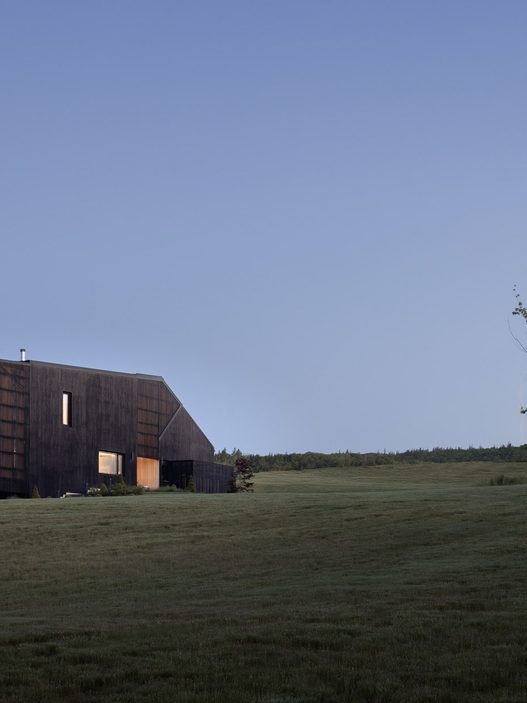
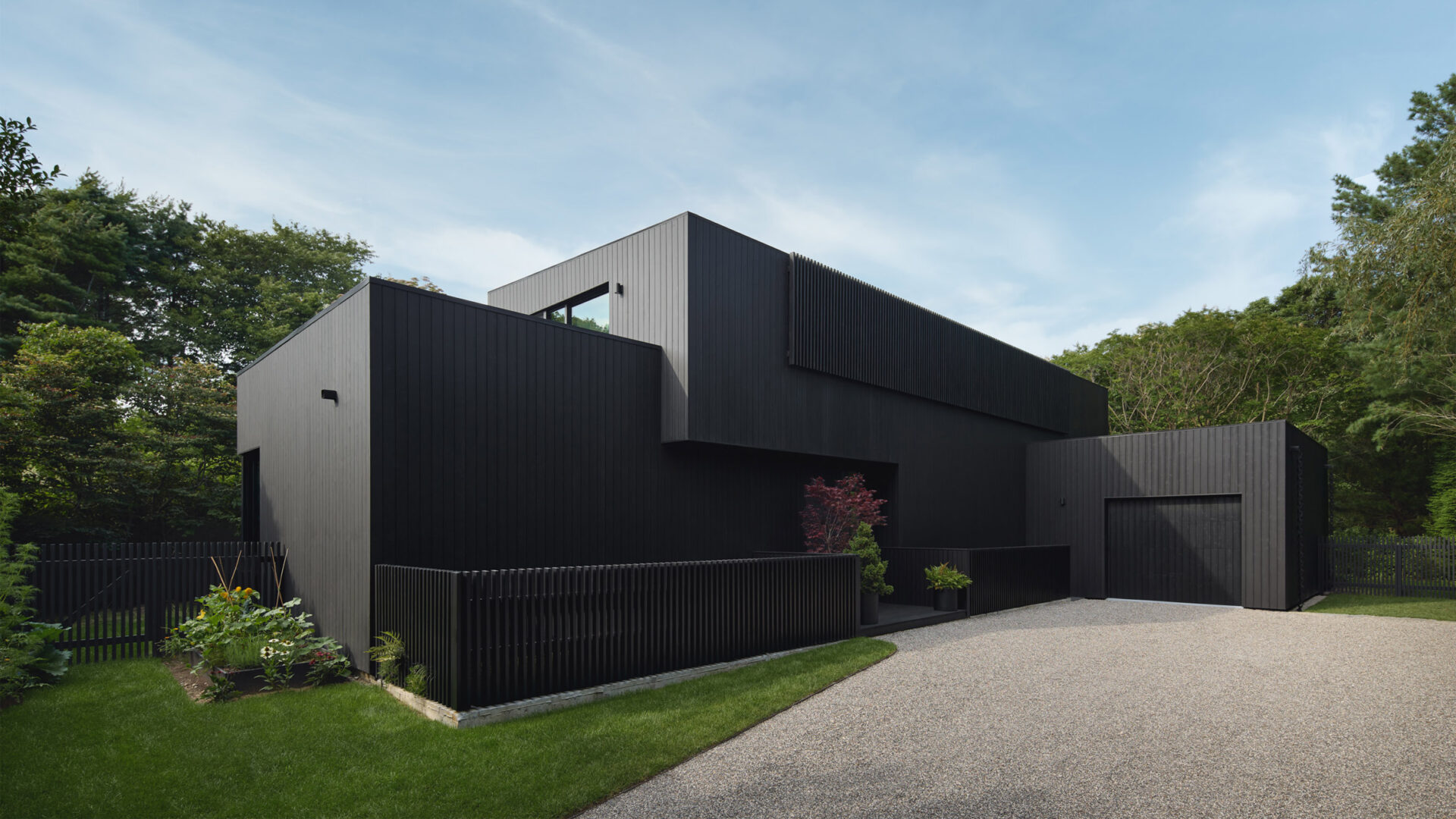
The front facade is intentionally opaque, creating an intimate sense of privacy and a striking, minimalist visual identity.
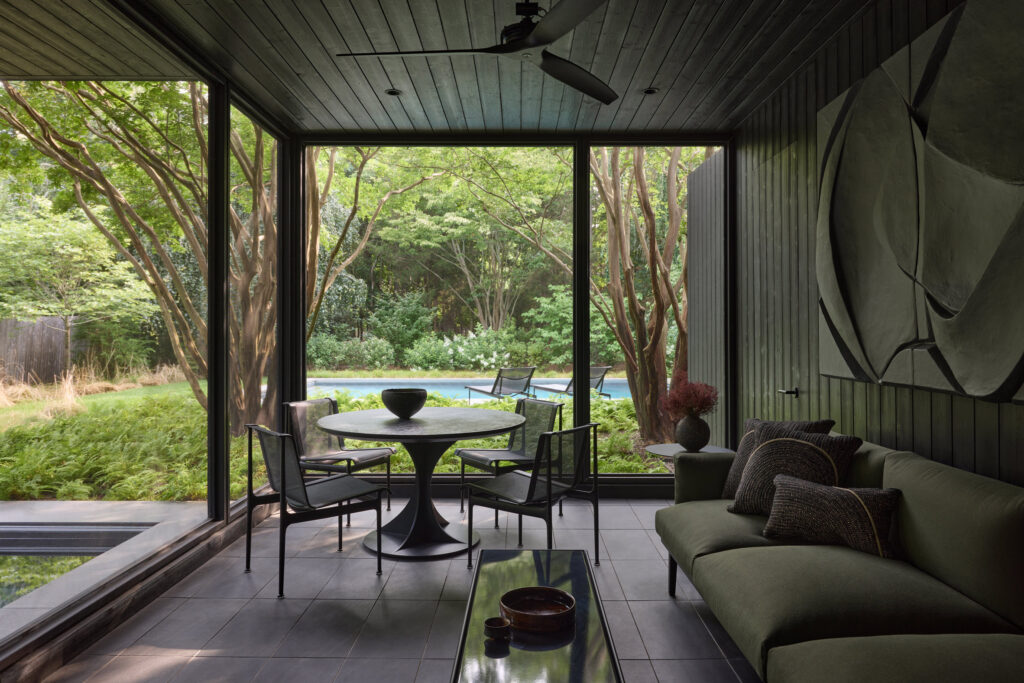
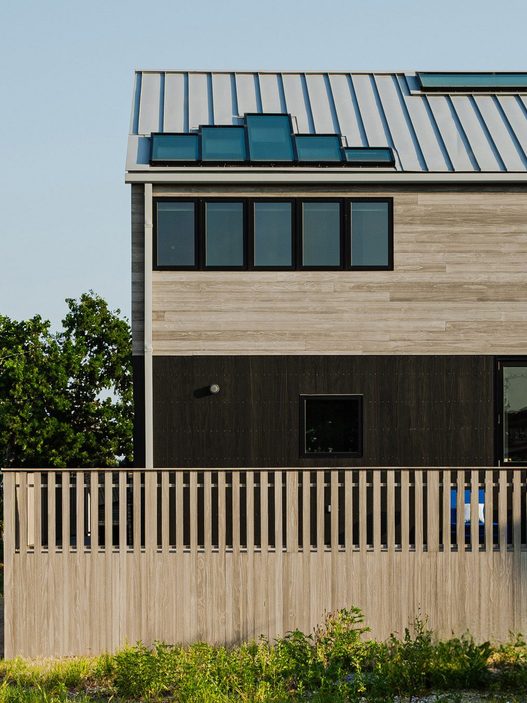
To achieve this rustic yet highly contemporary look, the exterior is clad in a beautiful, black-stained, thermally modified spruce. This striking dark wood treatment directly references the weathered cladding seen on historic Japanese buildings.
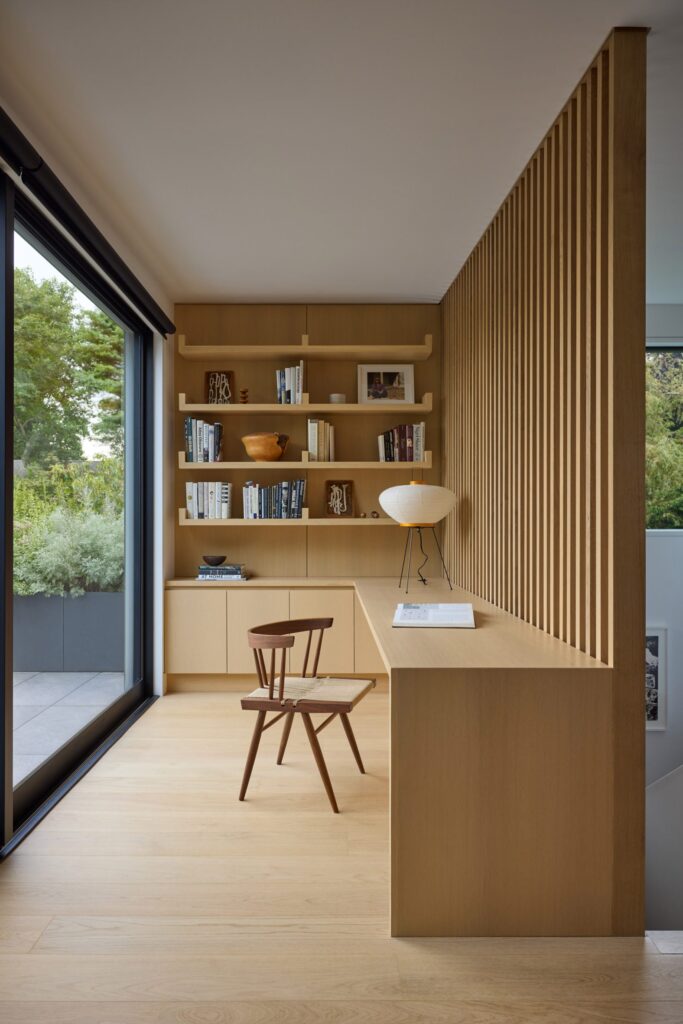
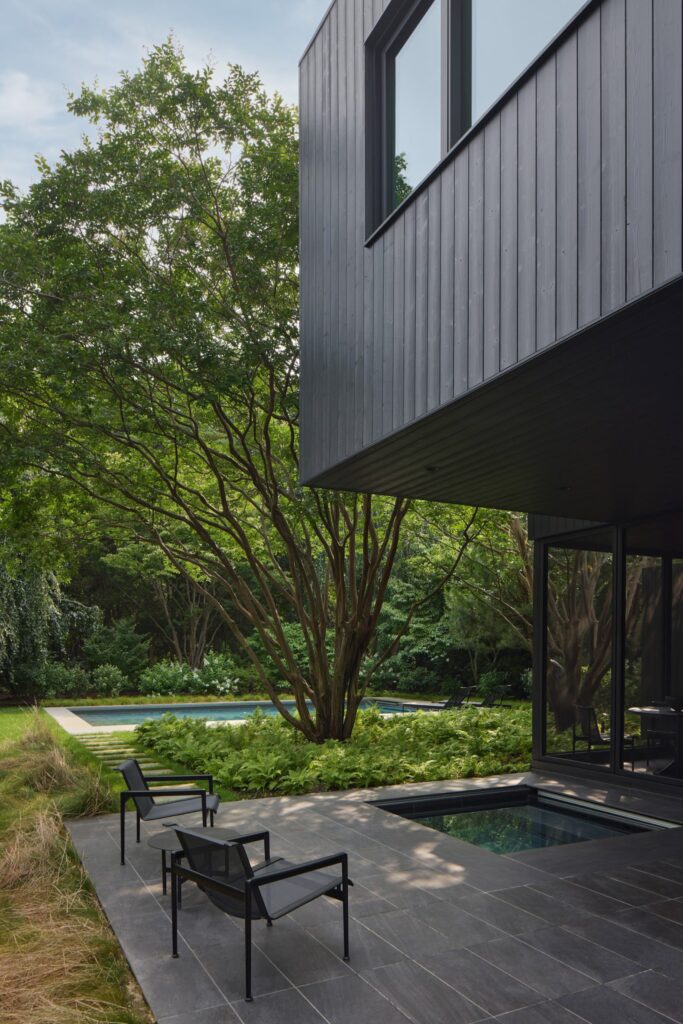
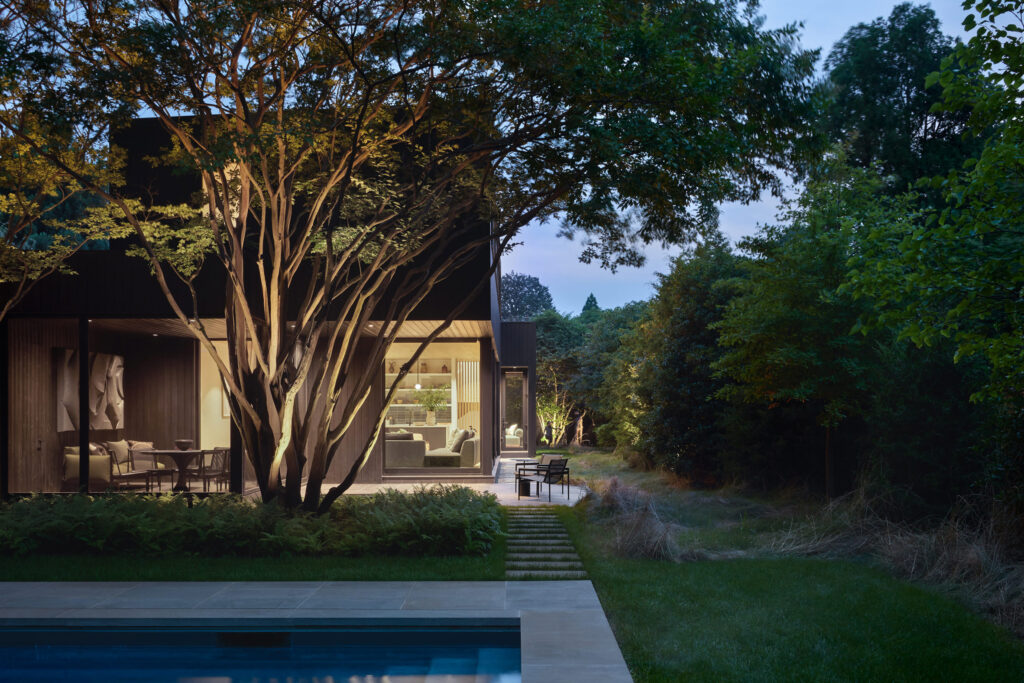
The rectilinear, L-shaped structure cleverly rethinks the standard beach house archetype, completely opening up with massive expanses of glass only when you transition around to the private backyard spaces.
Honoring the Existing Landscape
Rather than completely wiping the slate clean on this landlocked quarter-acre property, the design team showed immense respect for the plot’s history.
While a badly aging structure was removed to make way for the new build, Khanna Schultz chose to preserve the original swimming pool and several mature plantings.
Most notably, two majestic crape myrtle trees on the eastern side of the property were saved and transformed into the literal and metaphorical focal point of the entire architectural layout.
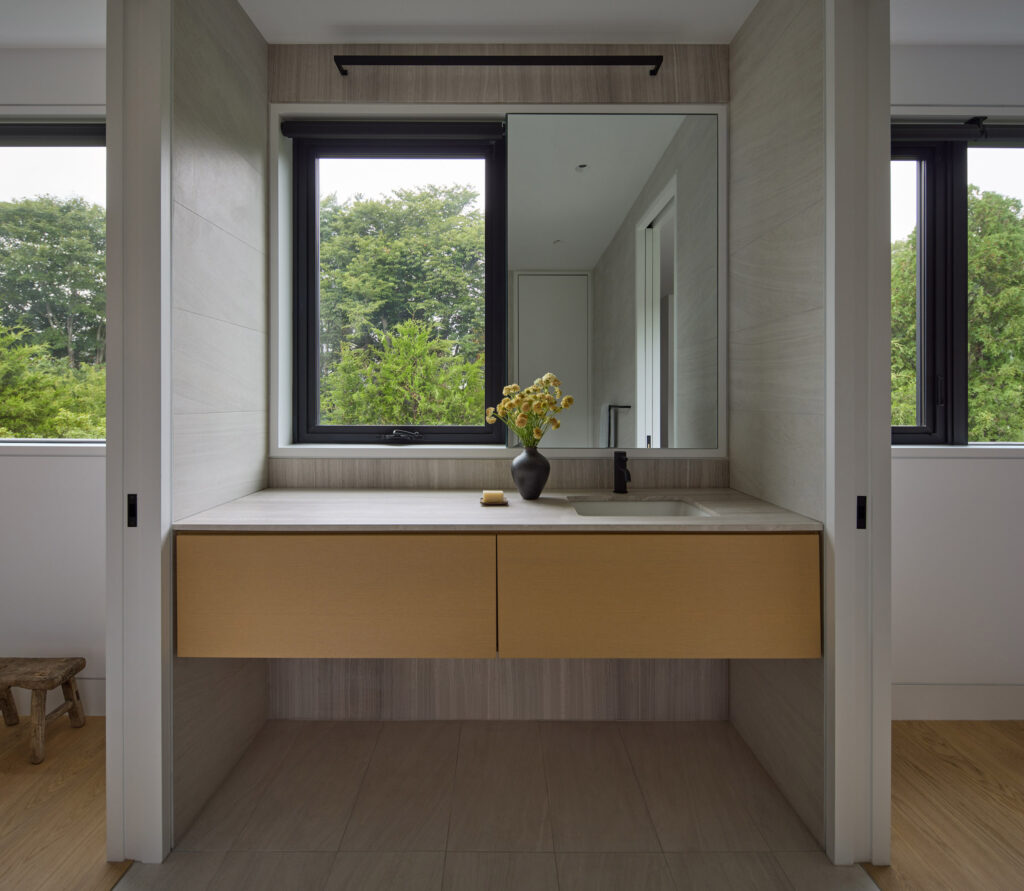
Now, the main living areas and the primary bedroom suite perfectly frame views of these historic trees, which gracefully overlook the sparkling pool area and anchor the sleek modern building to its natural environment.
Calm and Curated Interiors
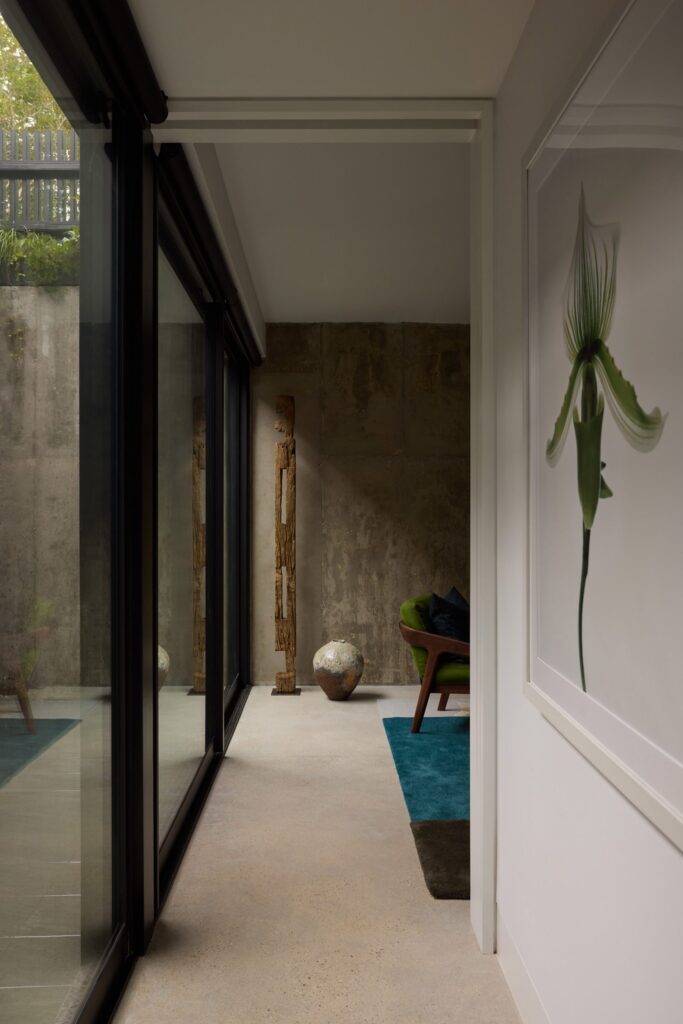
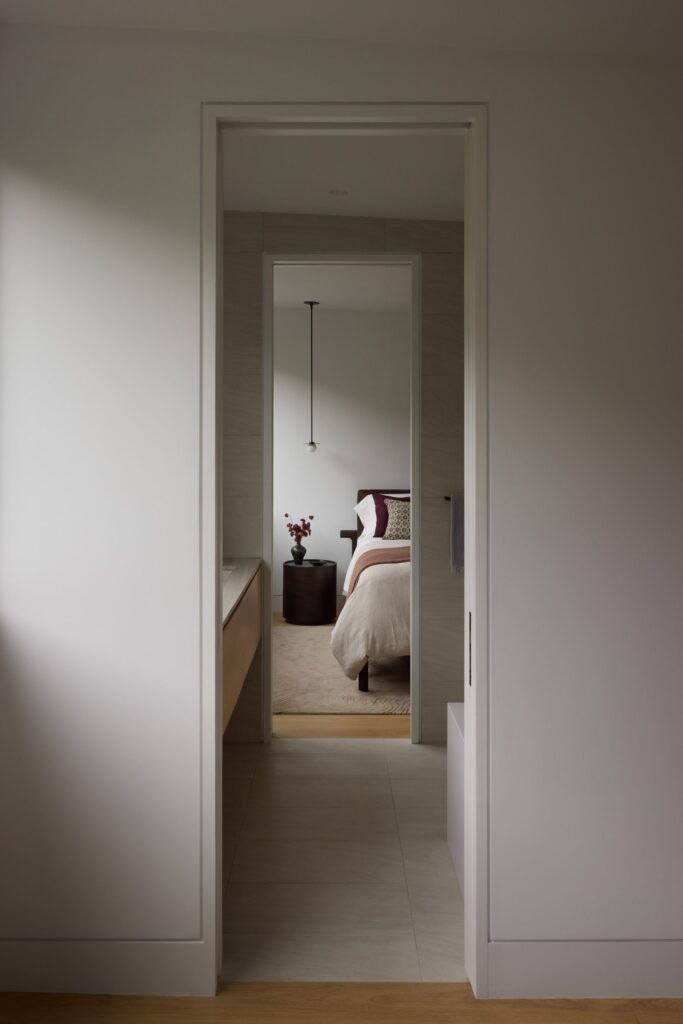
Stepping inside reveals a masterclass in tranquil, light-filled interior design. The ground floor layout handles the heavy lifting of daily life, housing the communal living zones, the primary bedroom suite, a garage, and a gorgeous screened porch.
The upper level hosts welcoming guest bedrooms, while a cozy family room is cleverly tucked away in the basement.
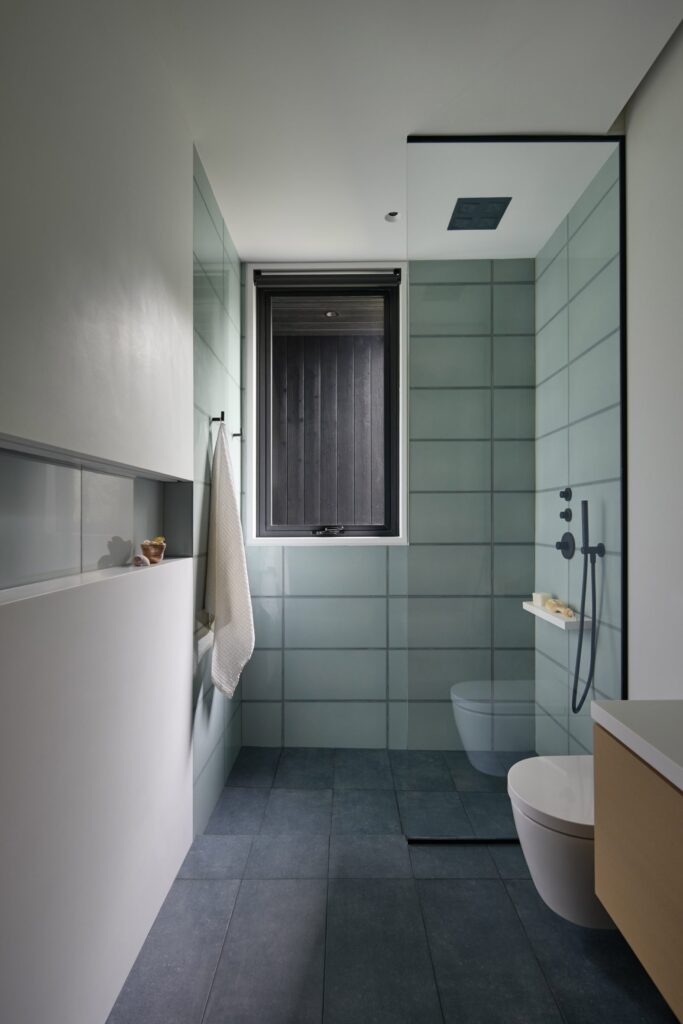
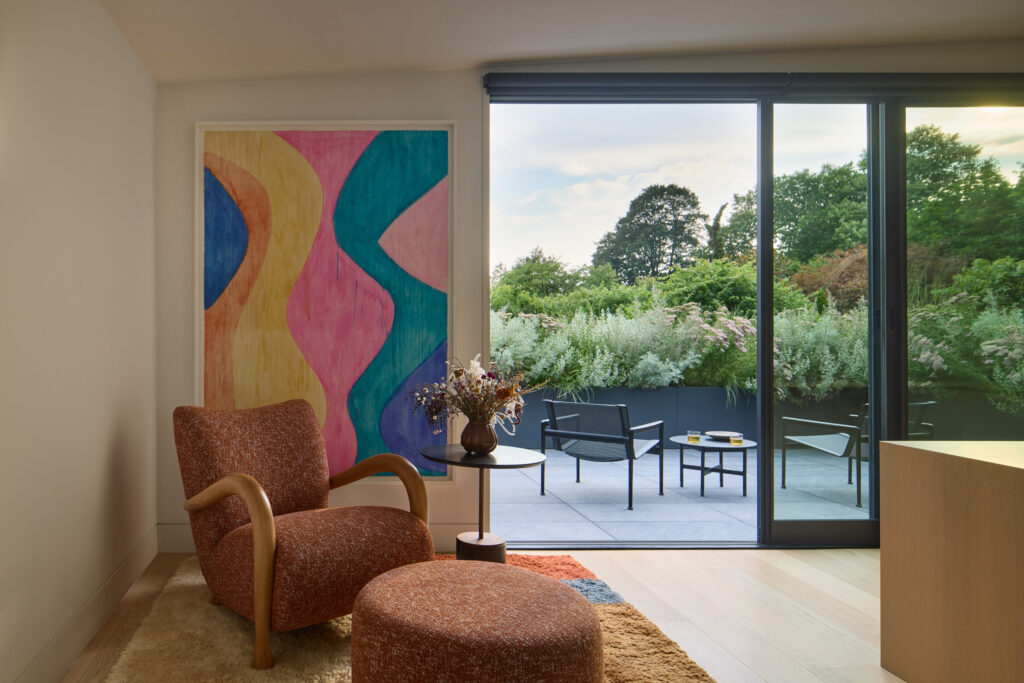
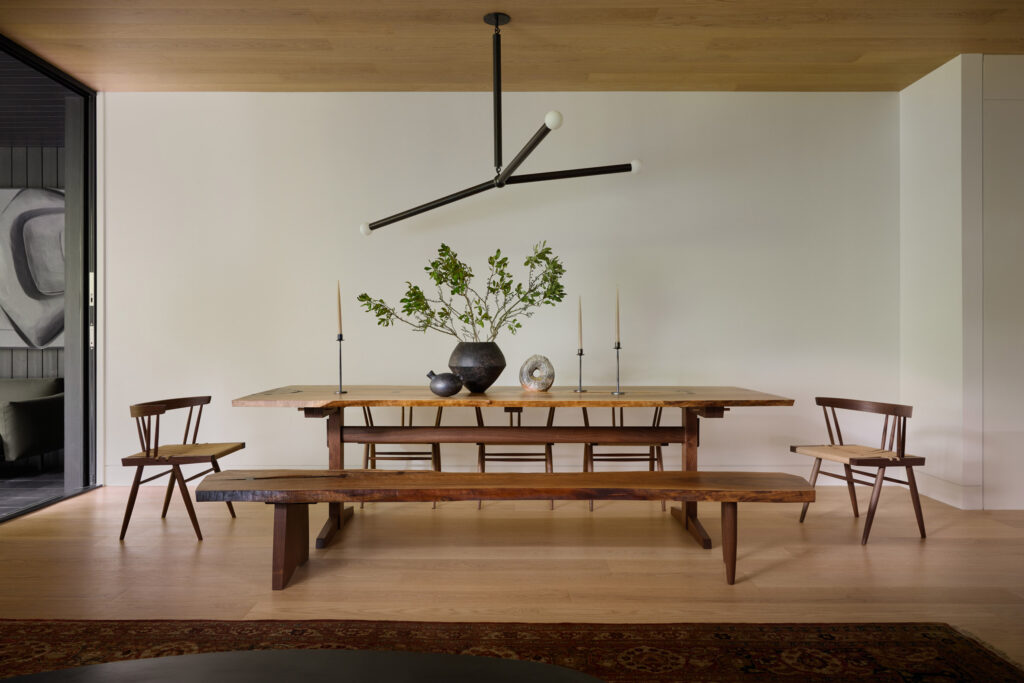
Throughout the home, light-filtering screens and bleached-oak flooring work in perfect harmony to establish an overwhelming sense of calm.
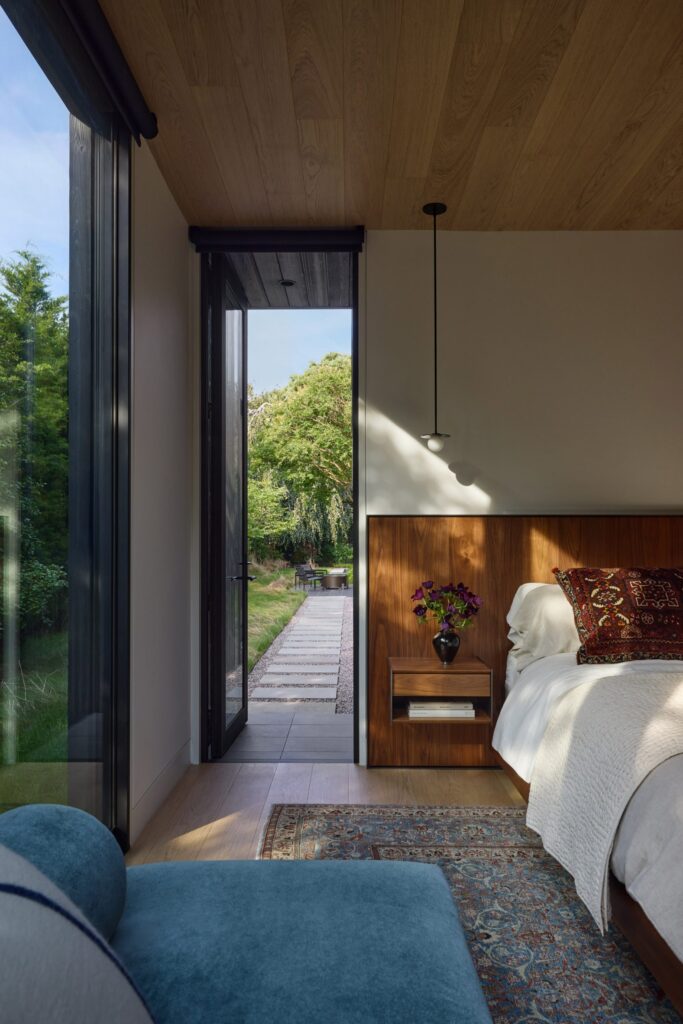
The curated furniture collection reads like a design lover’s wishlist, boasting a dining set from the iconic George Nakashima Studio, a classic lounge chair by Finn Juhl, and bespoke, handcrafted pieces by Brooklyn artisan Mark Jupiter.
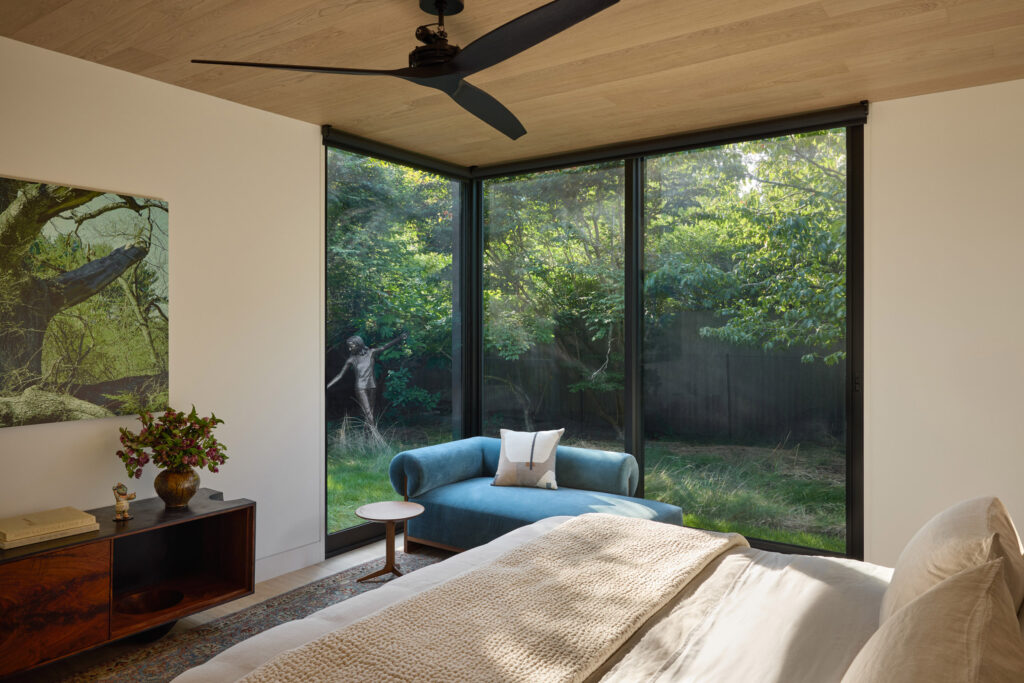
These heirloom-quality furnishings are beautifully paired with the client’s extensive collection of art and ceramics acquired during her time in Japan.
Uncompromised Net-Positive Performance
What makes The House in Amagansett truly revolutionary, however, is its uncompromising commitment to the environment. This isn’t just an eco-friendly building; the studio has designed it to be a “net-positive-energy” home.
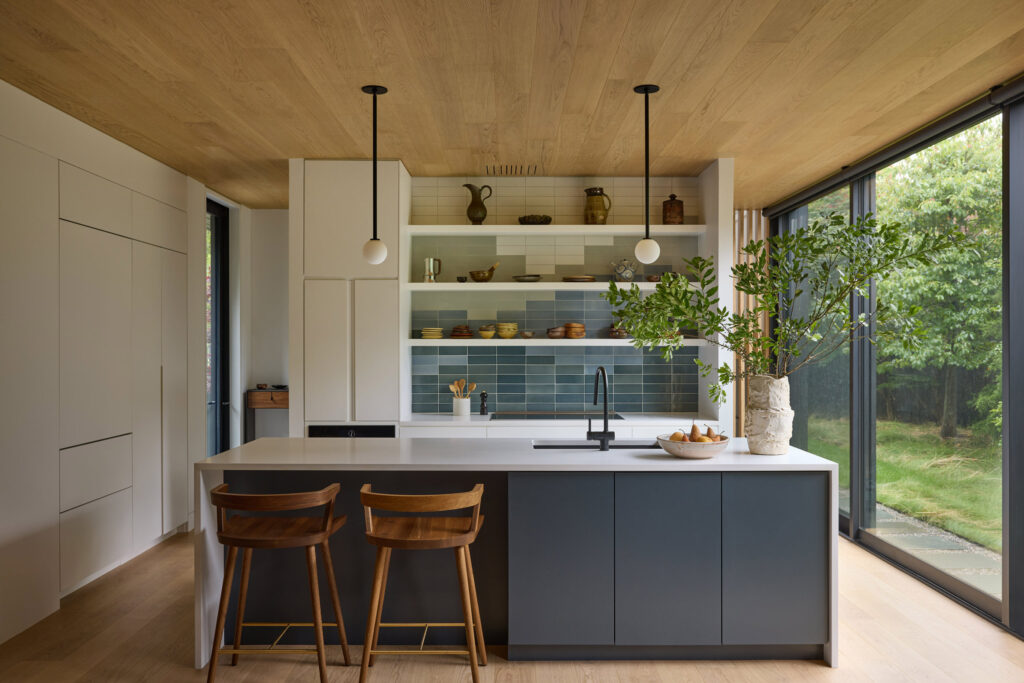
Thanks to a massive 23.25-kWh rooftop solar array, the property actually generates significantly more power than it consumes, effortlessly feeding the clean, excess energy back into the local grid.
This powerhouse solar setup works alongside a highly efficient geothermal heating and cooling system, as well as an advanced energy recovery ventilation system to dramatically minimize energy consumption.
To complete this sustainable vision, the surrounding landscape was replanted with native flora specifically chosen to attract local birds and pollinators, proving that high-end modern design can actively give back to the planet.

- Vintage Athletic Heritage: &SONS Finnegan Sweatshirt - October 6, 2026
- Heritage Horween Luxury: Stuart & Lau Cary Briefcase Founder’s Edition - October 6, 2026
- Rugged Heritage Utility: Line of Trade Waxed Ranch Jacket - October 6, 2026