









There is a particular kind of magic that happens when a forward-thinking architecture studio gets its hands on a crumbling piece of history. Instead of bulldozing the past to make way for the new, they engage in a dialogue with it, creating a space that feels both timeless and aggressively modern.

This is precisely what has occurred at the edge of the Bohemian Forest in the Czech Republic, where Prague-based Studio Plyš has breathed new life into a 19th-century ruin.
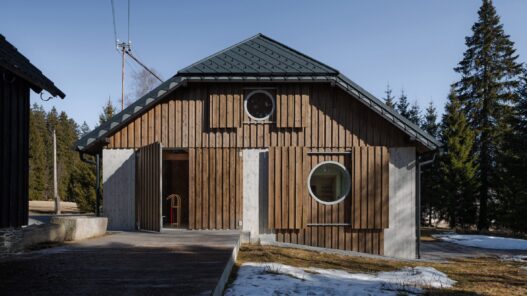
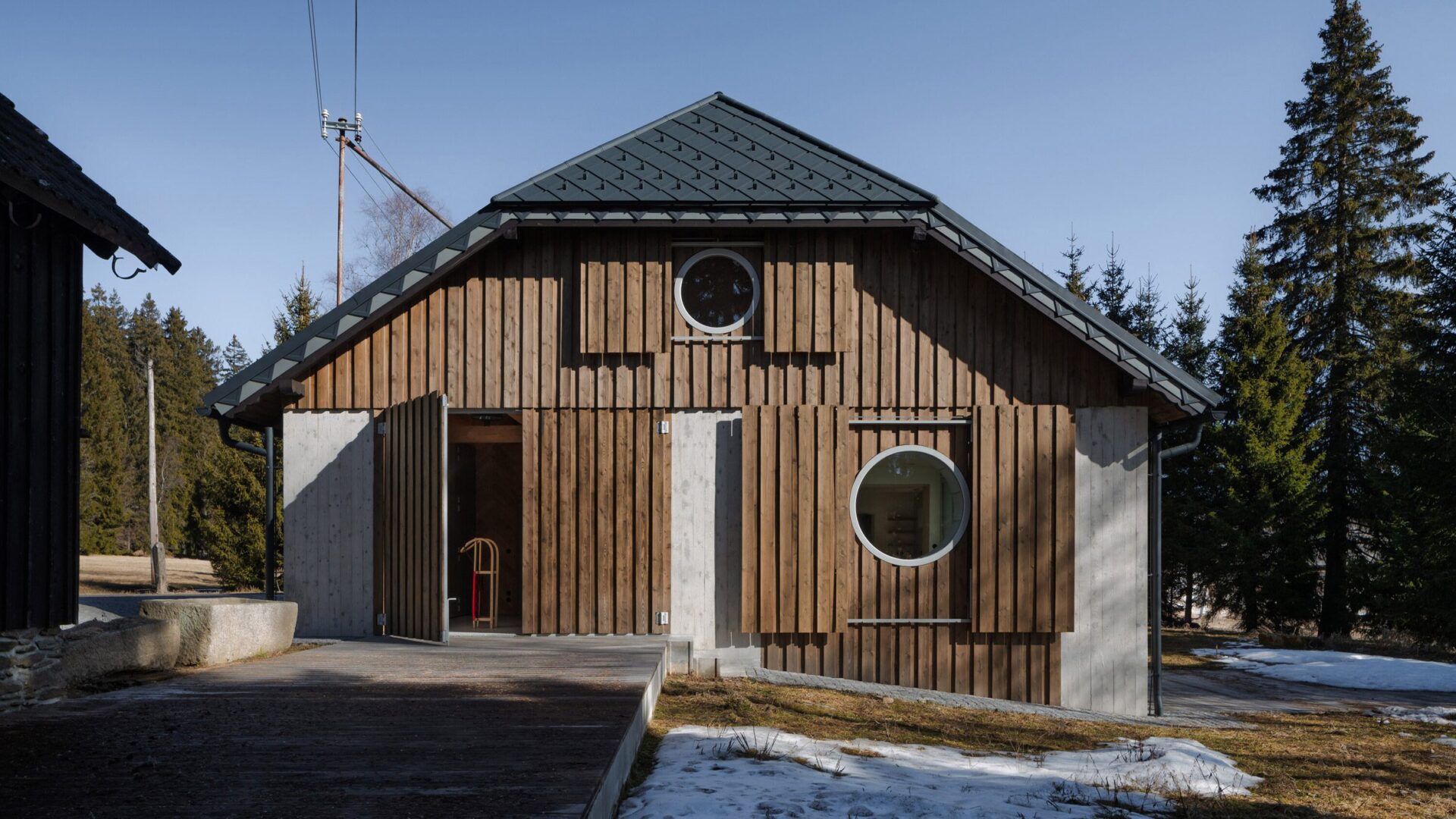
The result is the Borová Lada Cottage, a 333-square-metre masterclass in adaptive reuse that proves concrete, plywood, and ancient stone can live together in perfect harmony.
The project began as a rescue mission. The original timber and stone structure had suffered through a series of “unsuitable” repairs during the 1980s and 90s—the architectural equivalent of a bad haircut that takes decades to grow out. Studio Plyš stripped back these clumsy interventions to reveal the cottage’s authentic bones, but they didn’t stop there.
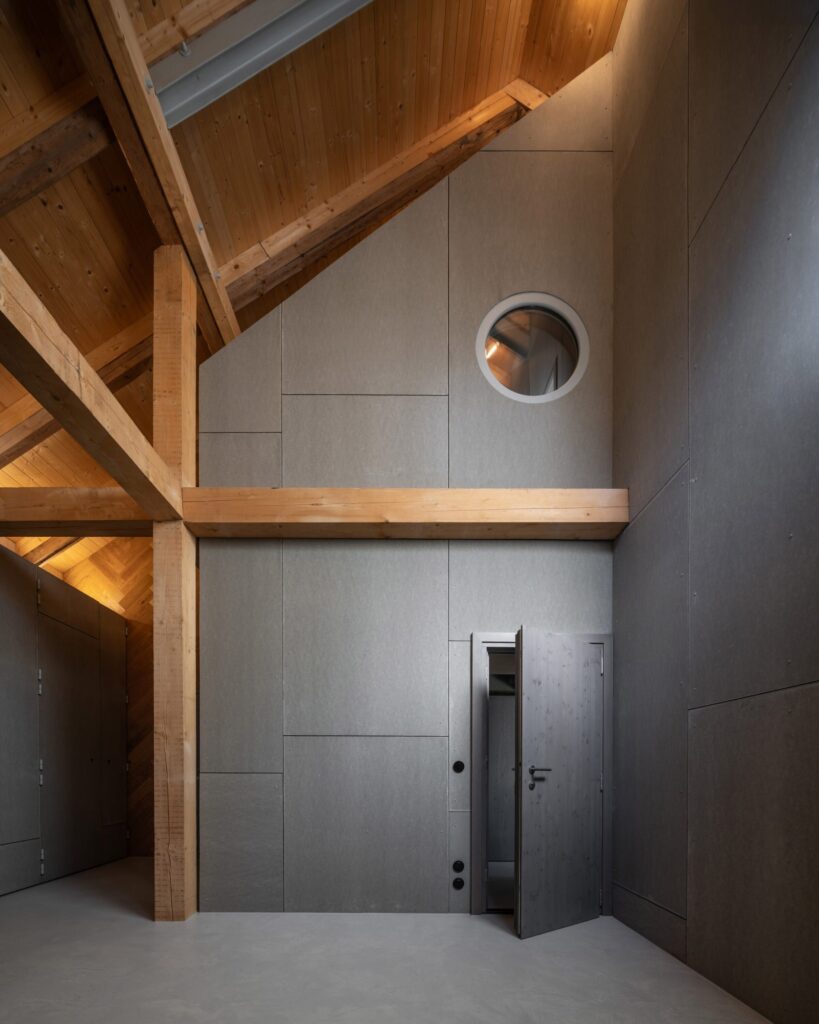
They introduced a palette of raw, industrial materials—steel, board-marked concrete, and fibre cement—deliberately leaving them exposed to highlight the strata of the building’s history. It’s an approach that celebrates the scars and stories of the house rather than hiding them behind dry wall.
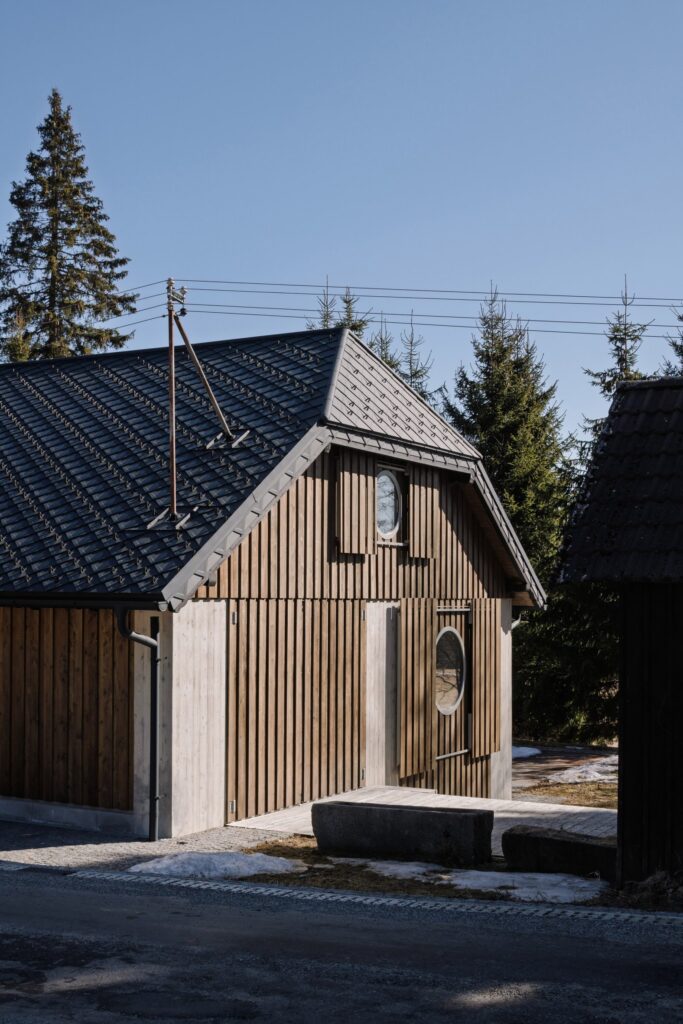
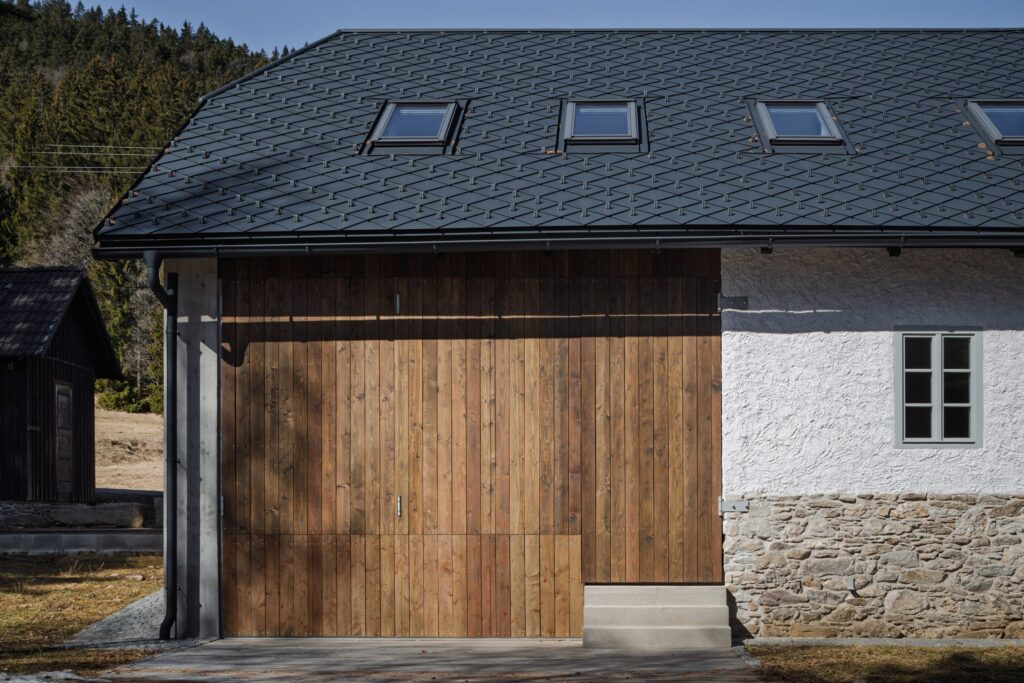
The transformation is most dramatic at the cottage’s southern end. Here, structural necessity birthed a stunning design feature: three massive, cast-in-situ concrete columns were erected to support the new roof and foundations.
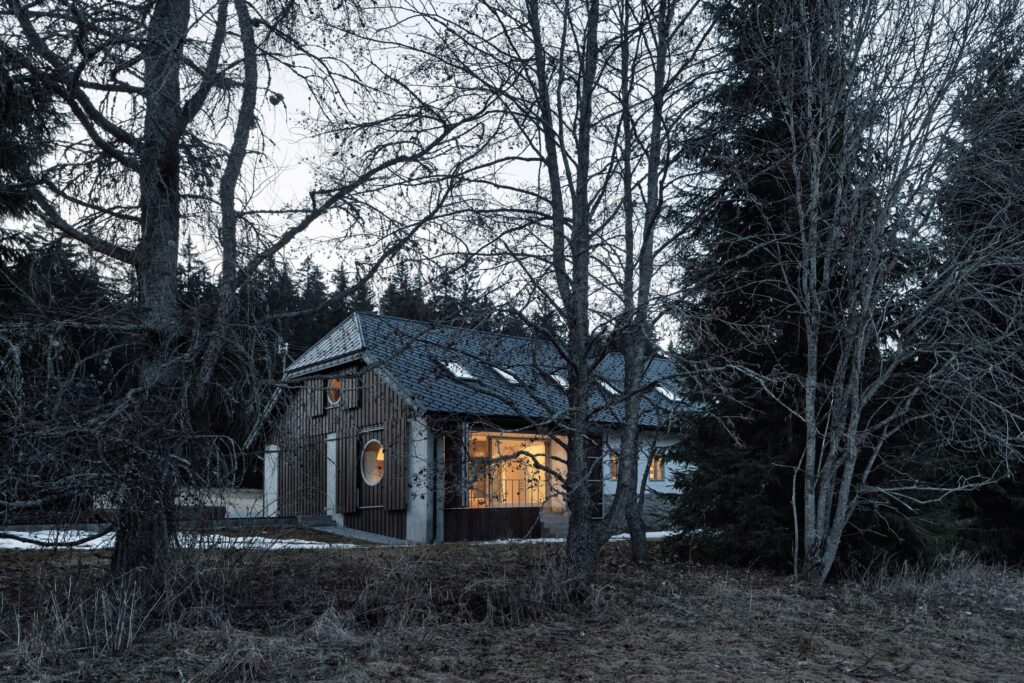
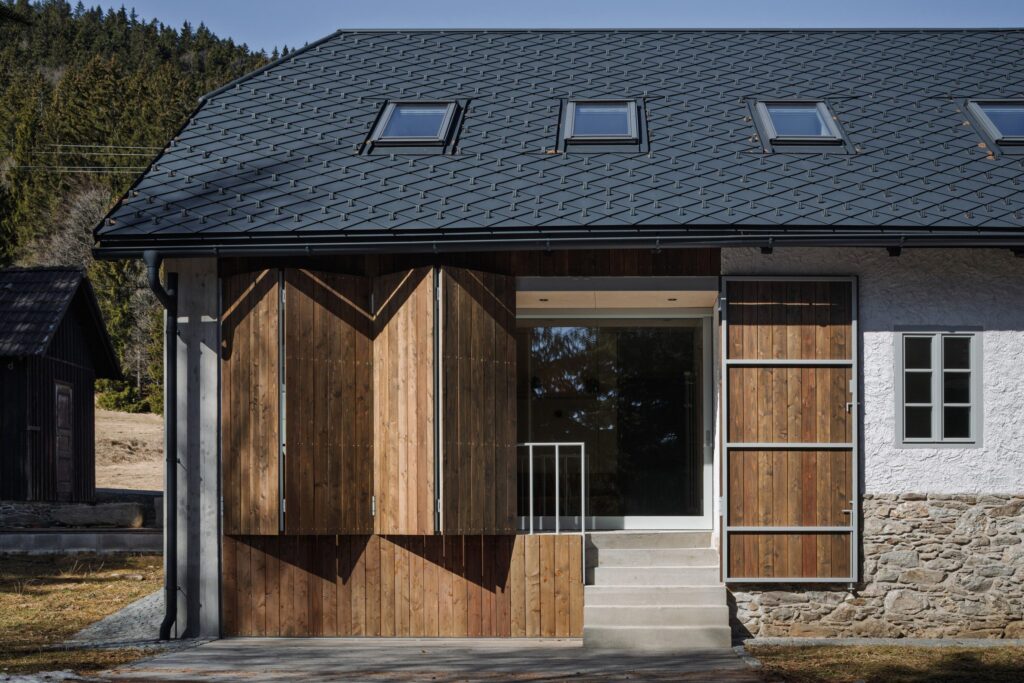
These columns anchor the gable end, creating a focal point where the heavy, historic masonry meets the sharp lines of modern engineering. The gaps between these concrete monoliths are clad in dark timber panels, which hide motorized shutters on exposed steel rails.
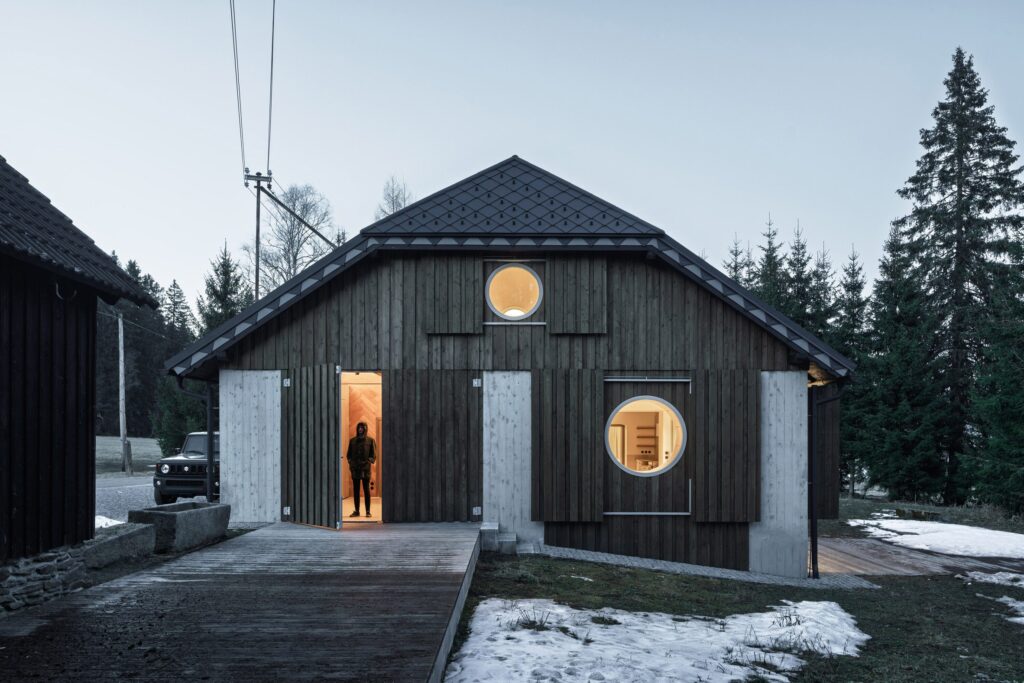
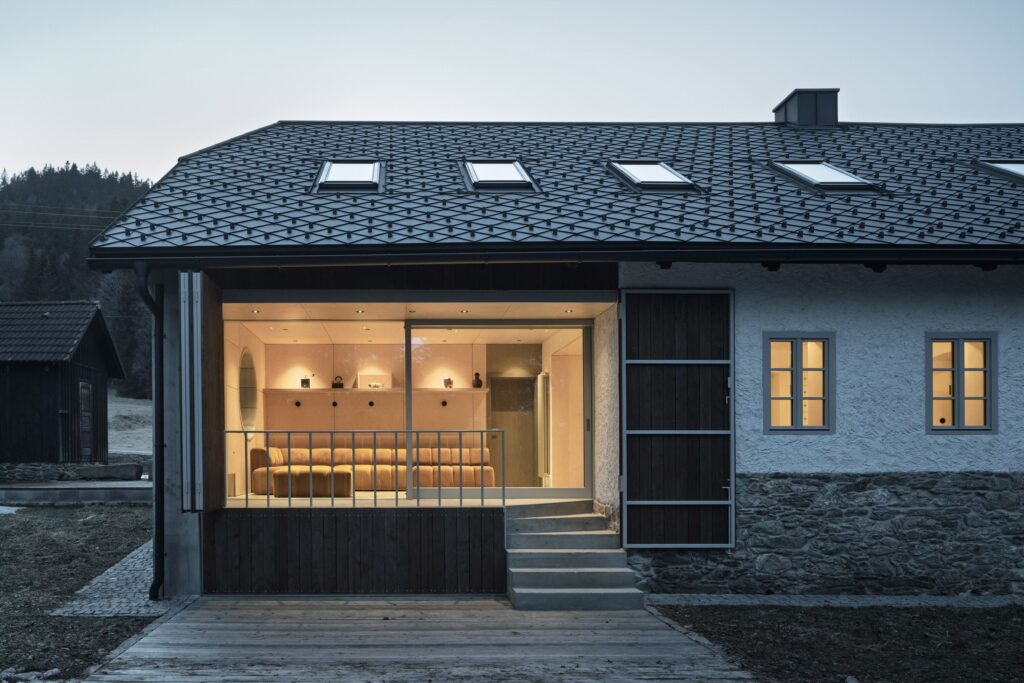
When opened, they reveal full-height sliding glass doors that dissolve the boundary between the living area and the wild garden beyond. It’s a setup that invites the moody atmosphere of the Bohemian Forest right into the living room.
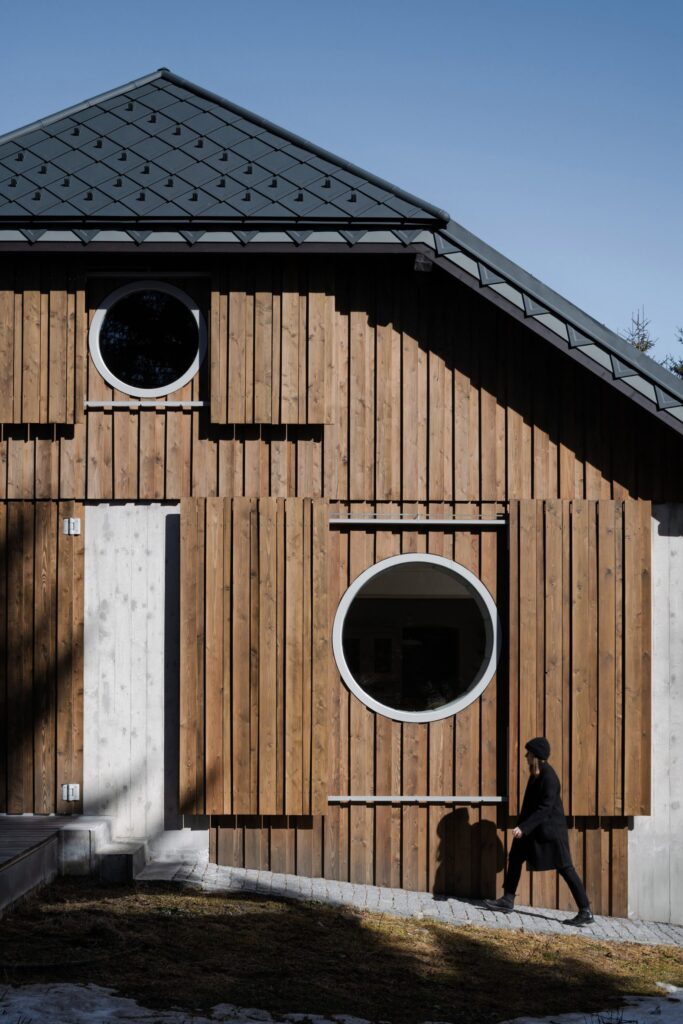
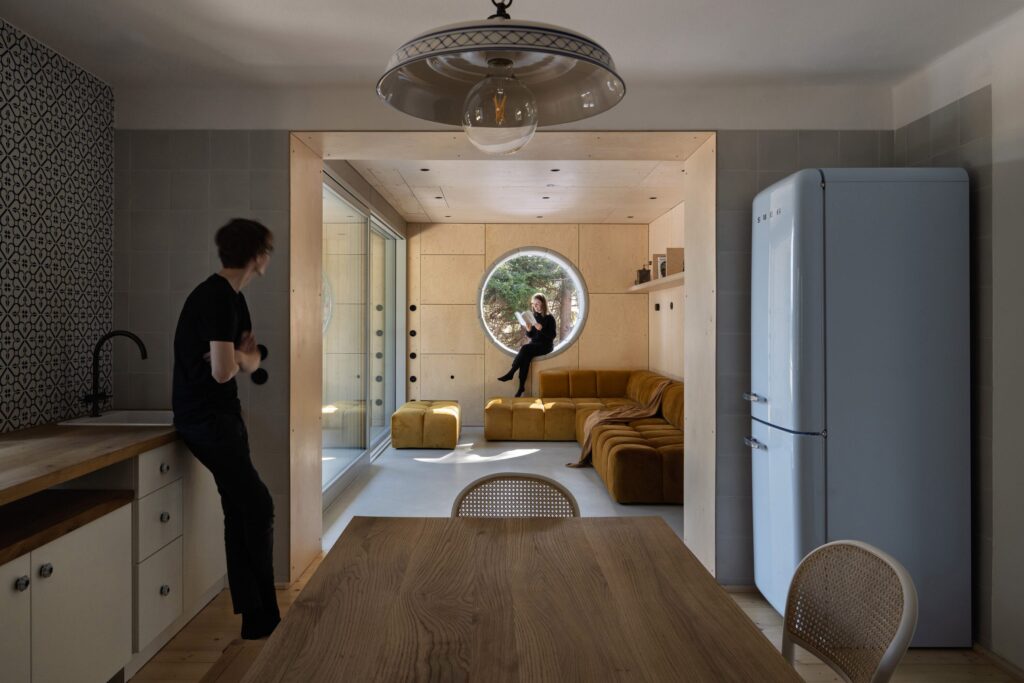
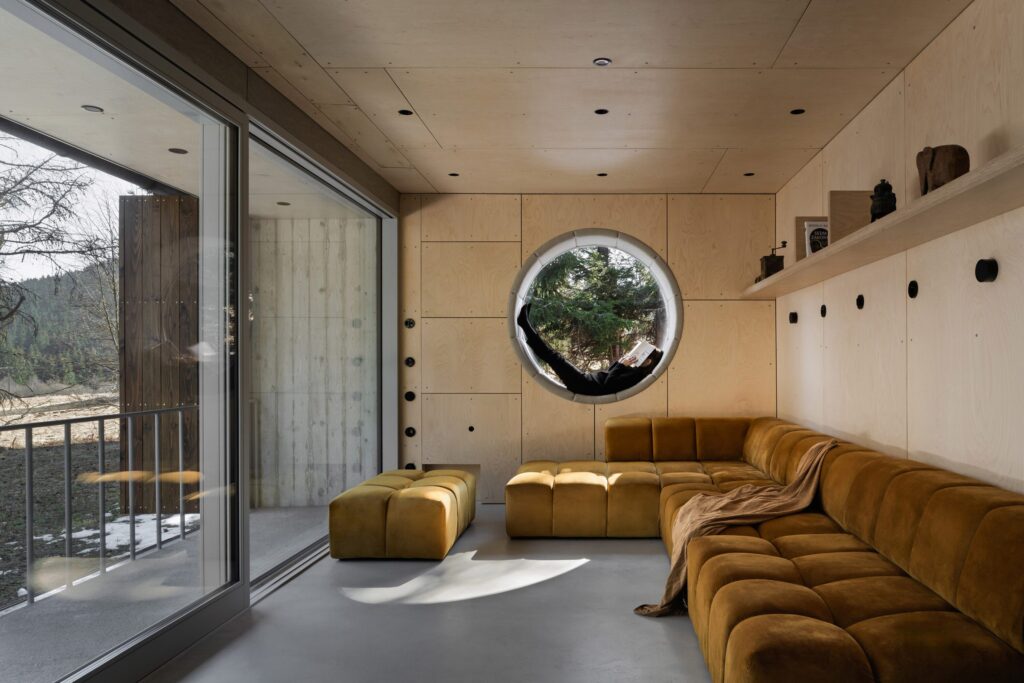
Speaking of the living room, it houses one of the home’s most enviable features: a massive porthole window. But this isn’t just for looking out of; the architects have padded the internal rim to create a deep, circular sit-in reading nook set within a plywood-clad wall.
It is the ultimate spot for curling up with a book while the snow falls outside, protected by the thick walls but visually connected to the landscape.
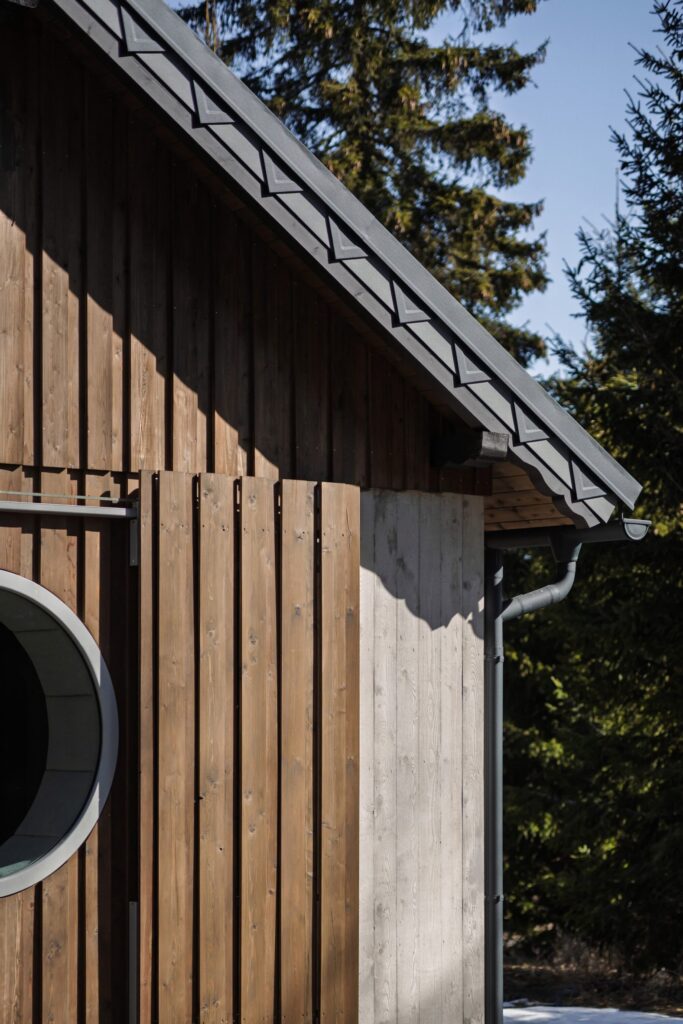
The interior material palette mirrors the exterior’s honesty, with the same larch used outdoors continuing inside to clad walls and ceilings, establishing a holistic, warm environment that counterbalances the cool touch of the concrete.
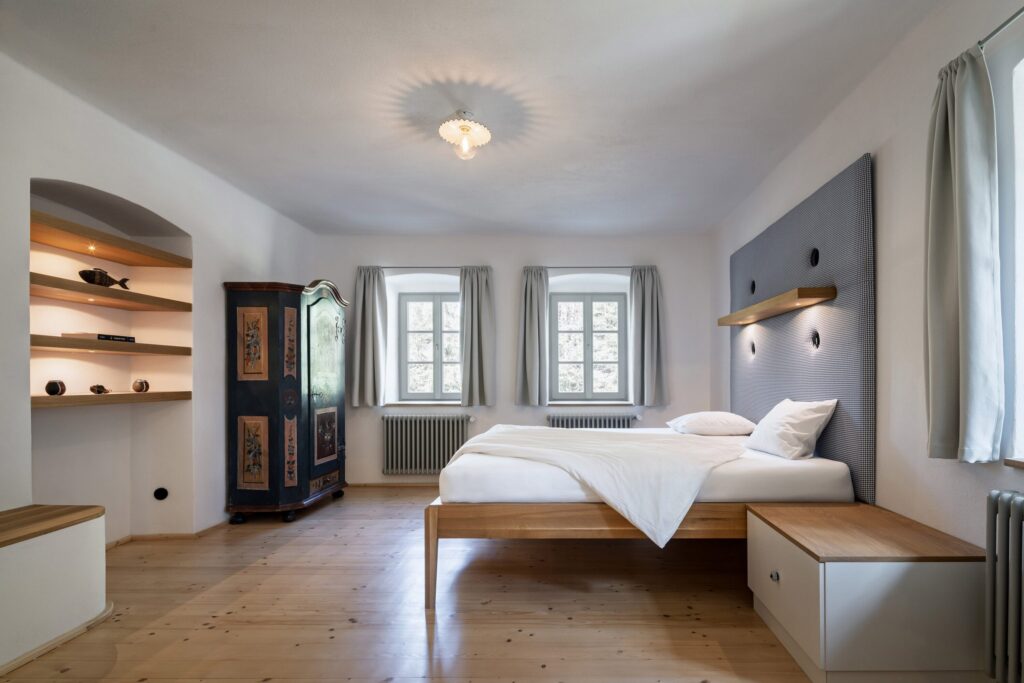
The renovation also saw the attic transformed from a dusty storage space into the heart of the home’s sleeping quarters. To maximize the usable area under the eaves, the architects inserted bedroom units at the edges of the plan, tucked beneath sloping steel and timber beams.
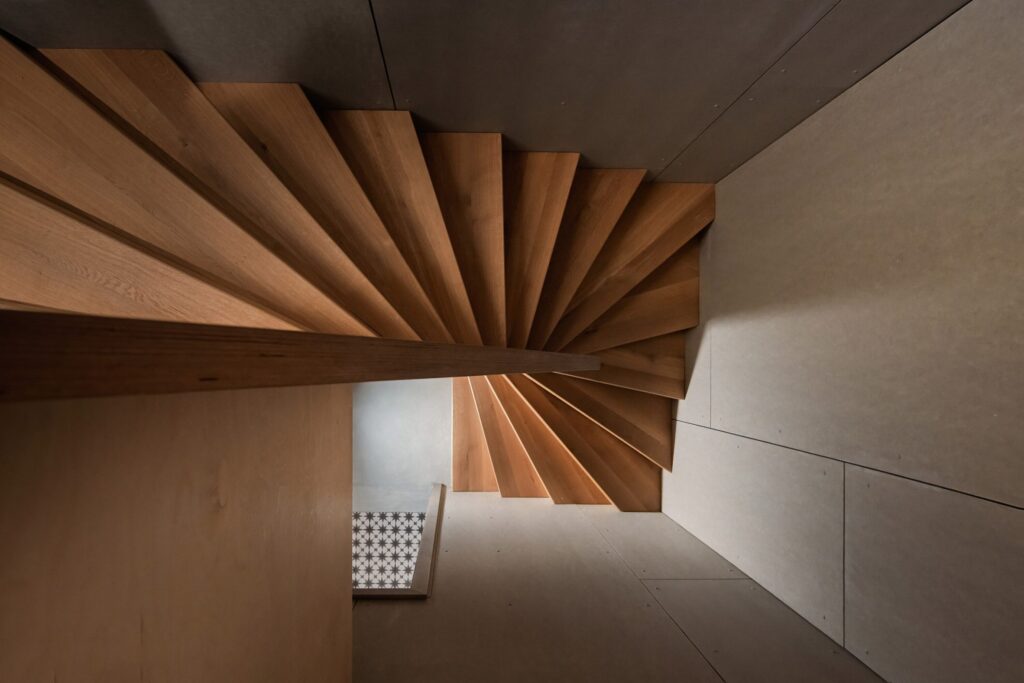
A central, communal space is framed by timber beams clad in fibre cement boards, creating a loft-like vibe that feels surprisingly airy for a cottage.
Perhaps the most charming detail, however, is found on the roof. Topped with metal shingles, the roof features a distinctive zigzag pattern along the edge.
This isn’t just a geometric flourish; it is a direct reference to the “zmijovka,” a traditional Czech knitted wool cap often worn in the countryside. It’s a witty, culturally specific nod that grounds this high-design project firmly in its local context.
Borová Lada Cottage is a triumph of texture and time, a place where the 19th and 21st centuries don’t just meet—they embrace.

- Monar Unveils Hi‑Fi Canvas Speaker – Transforming Music into Paintings to Inspire Artistic Living with Studio‑Grade Sound - March 3, 2026
- All The Best New Menswear Pieces from the Relwen Spring/Summer 26 Drop - March 3, 2026
- A Toast To Workspace Perfection: The BALOLO Setup Cockpit Monitor Stand Large Whiskey Barrel Edition - March 3, 2026