









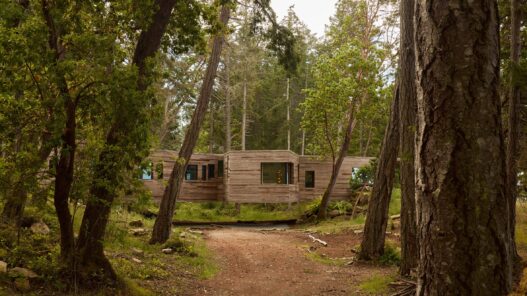
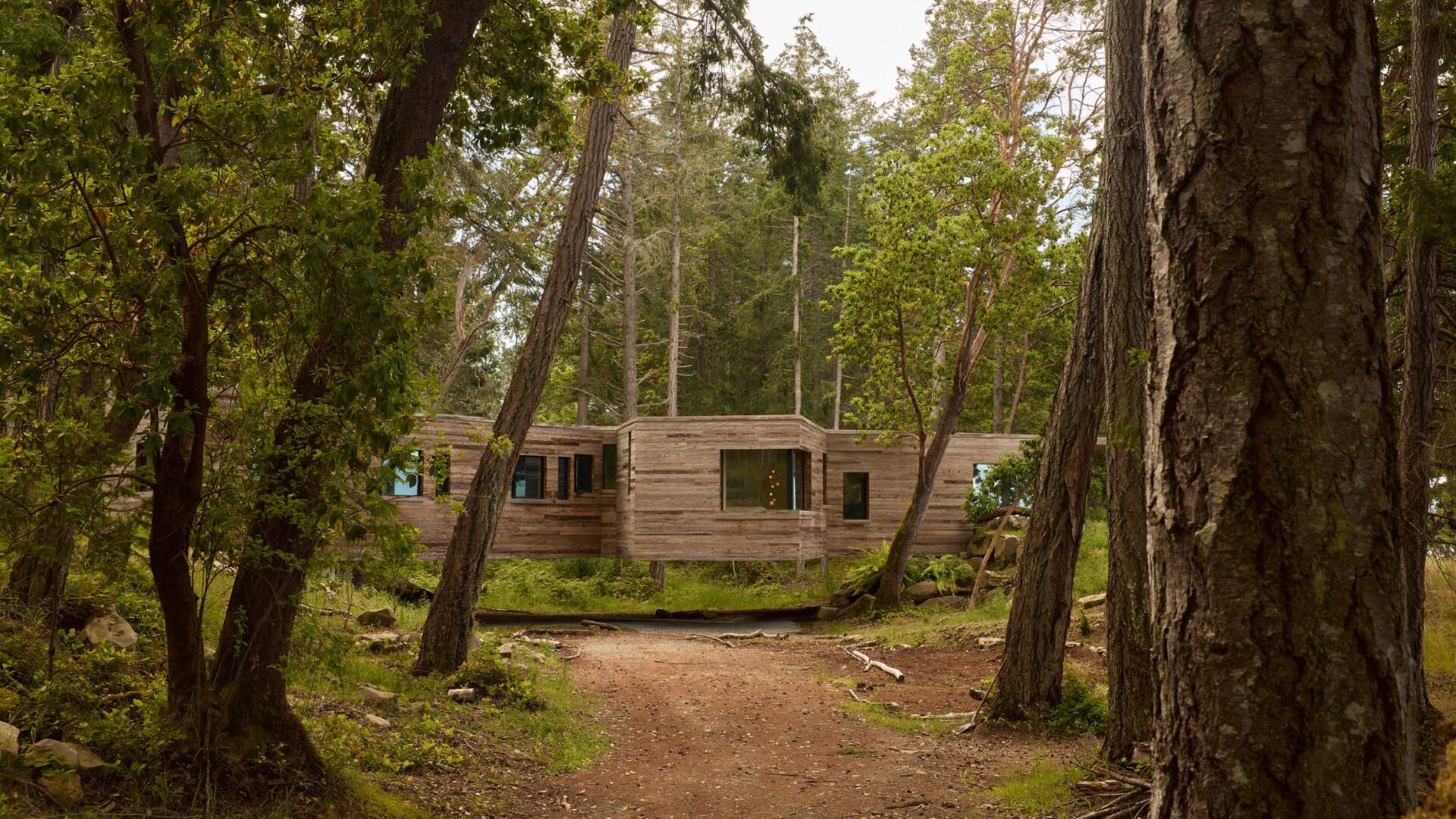
There are few architectural feats as satisfying as a structure that doesn’t just sit on the landscape, but engages with it in a conversation. We have seen our fair share of “cabins in the woods” here at The Coolector, but the 91.0 House (also known as Bridge House) by Omer Arbel Office is something altogether different.
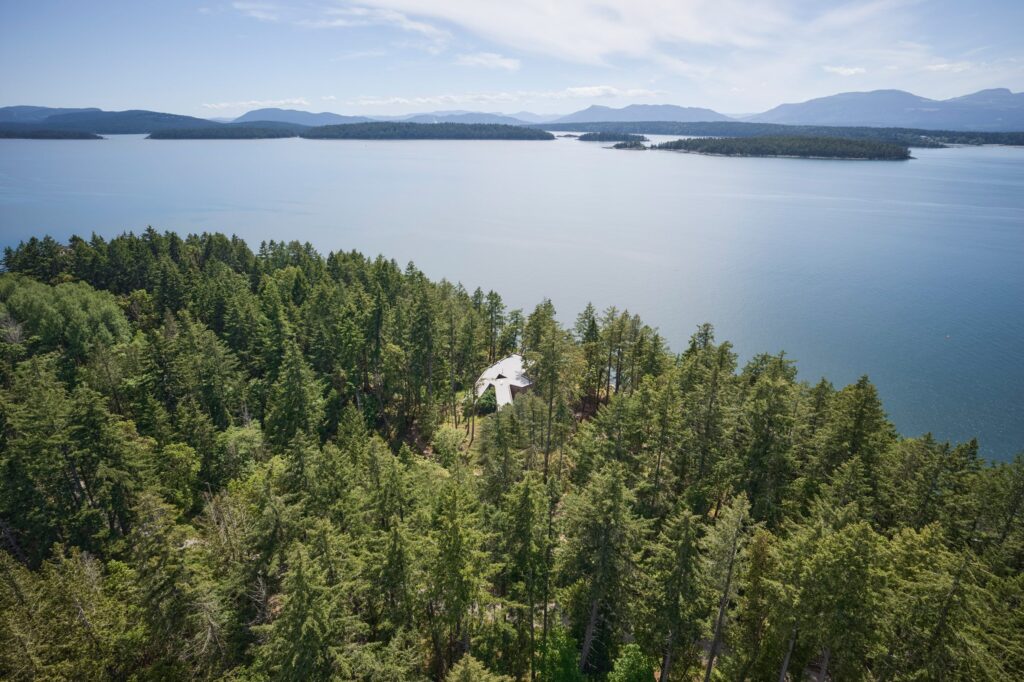
Situated on a steep, three-acre site on Galiano Island, British Columbia, this 3,200-square-foot residence isn’t merely placed among the trees; it is suspended between them, acting as a habitable bridge connecting two rocky ridges over a sunken gully of ferns.
The design is a masterclass in reading the land—both as it is now and as it might be in the future. The studio approached the project with a “phenomenological” perspective, reframing the narrative of climate change from one of apocalypse to one of adaptability.
Anticipating rising sea levels that could one day flood the gully below, the house is lifted safely above, turning a potential hazard into a dramatic architectural feature.
It is a structure built to weather the coming storms while celebrating the present tranquility of its waterfront location.
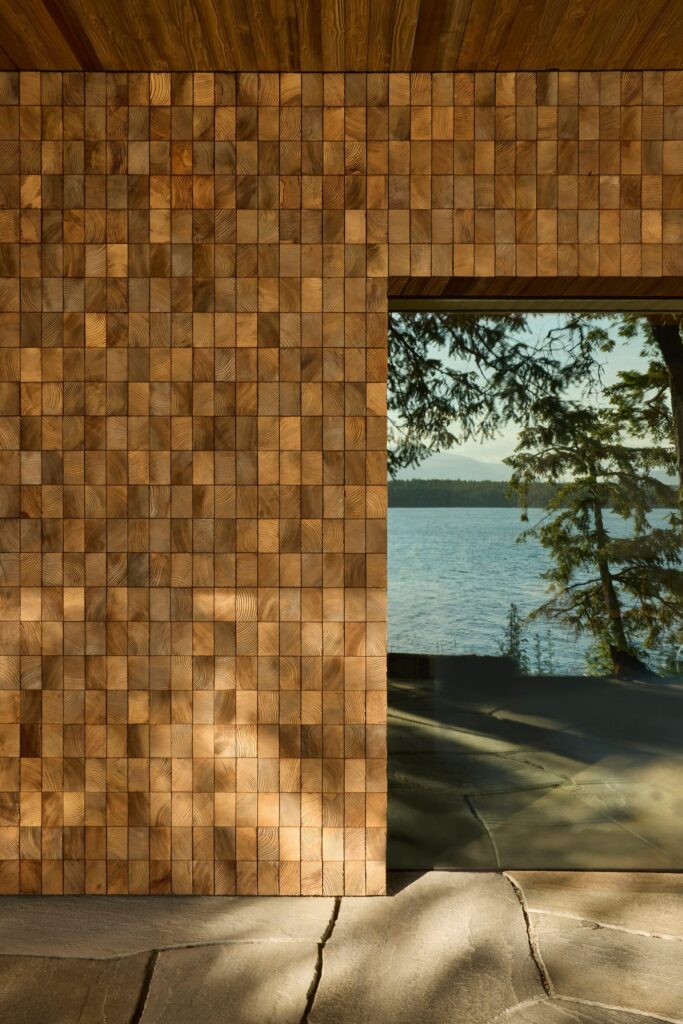
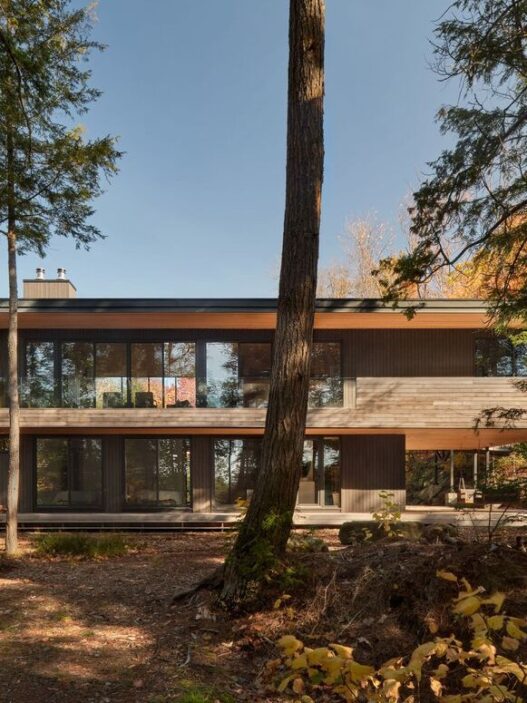
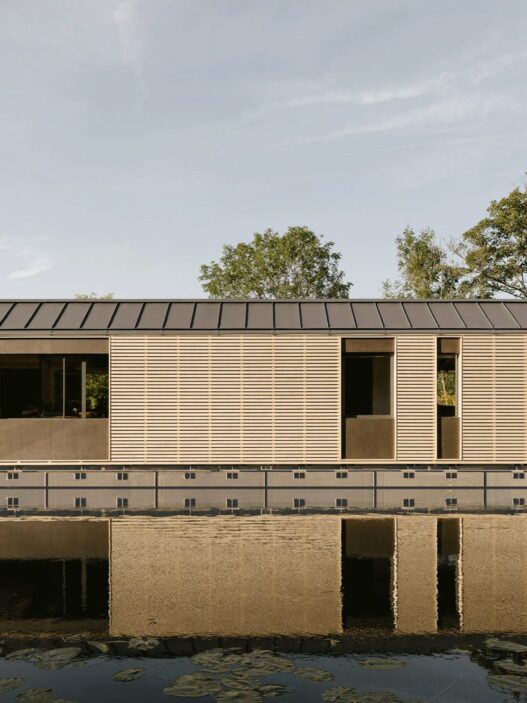
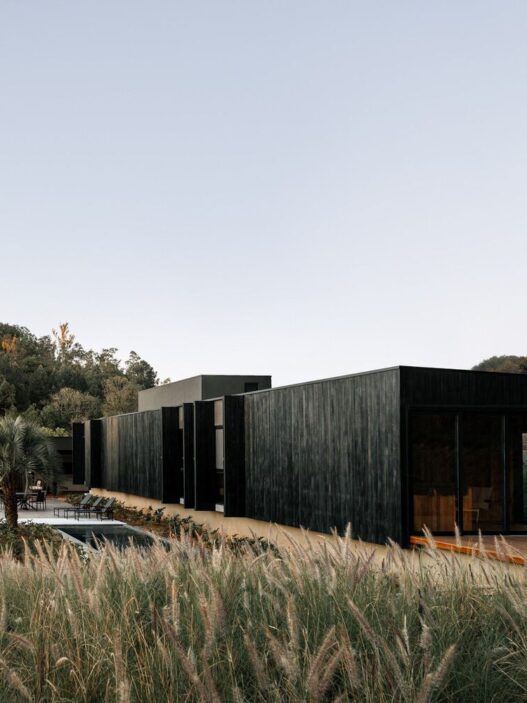
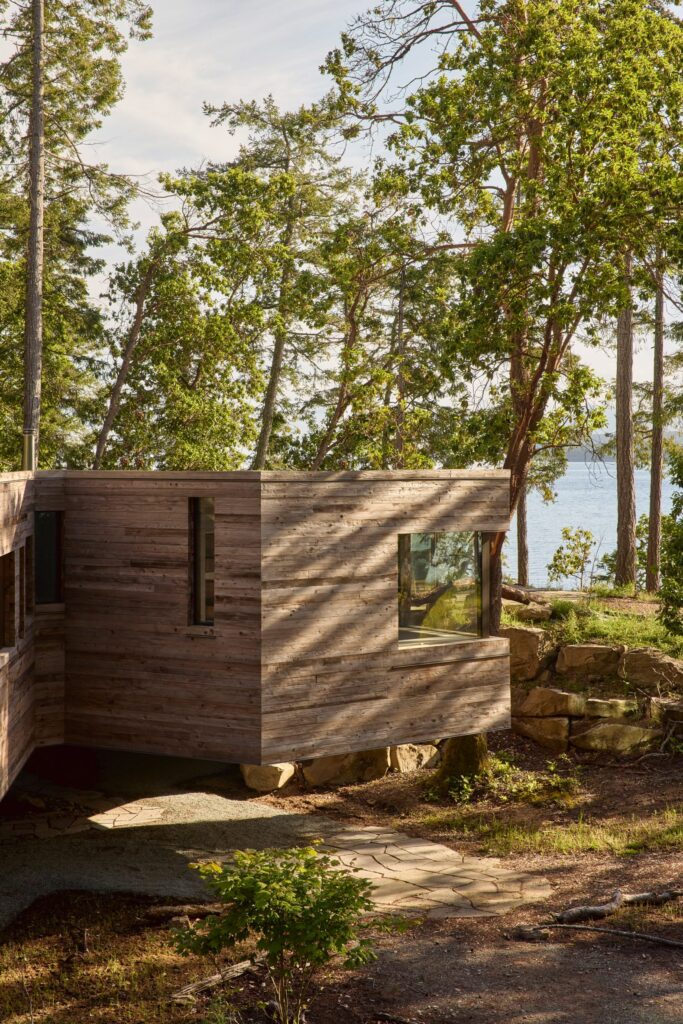
Visually, the 91.0 House creates a striking impression that feels both modern and deeply primitive. The exterior is clad in cedar, but not in the way you are used to seeing it.
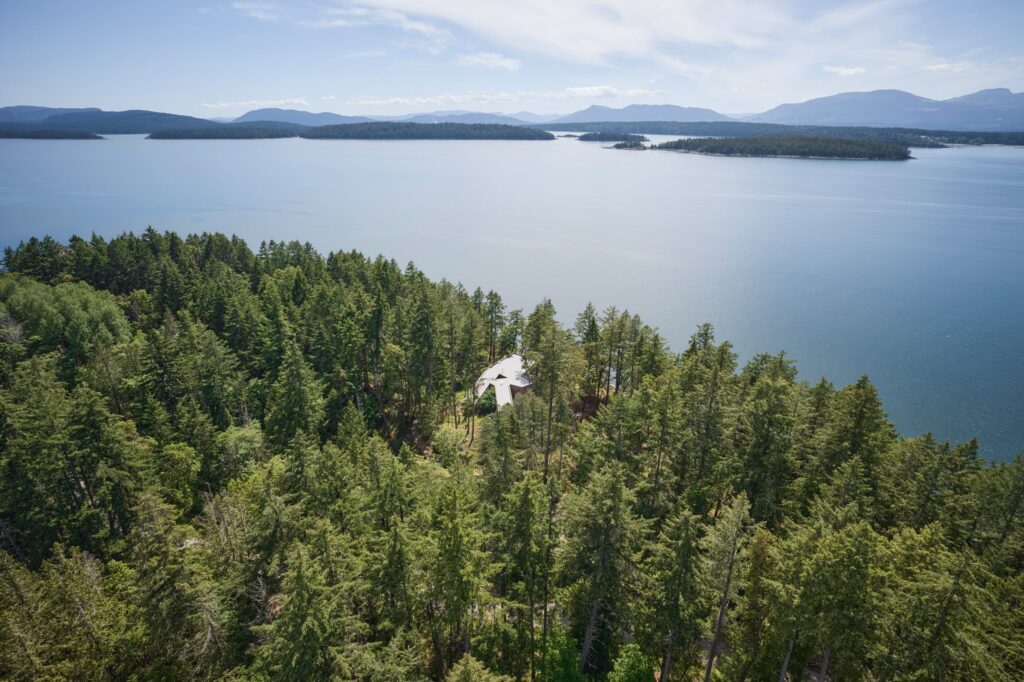
The studio developed a unique technique where the end grain of the cedar planks is sandblasted to “evoke the image of stacked lumber.”
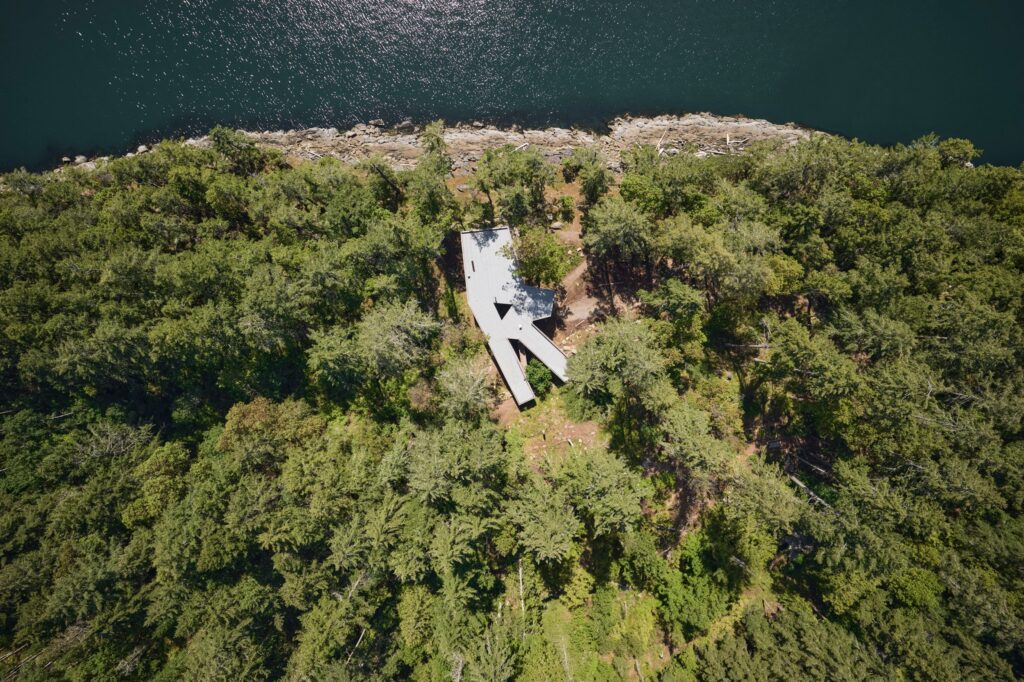
This gives the facade a raw, tactile texture that echoes the surrounding forest and lends the building a geological quality, as if it were a rock formation revealed by erosion rather than a constructed object.
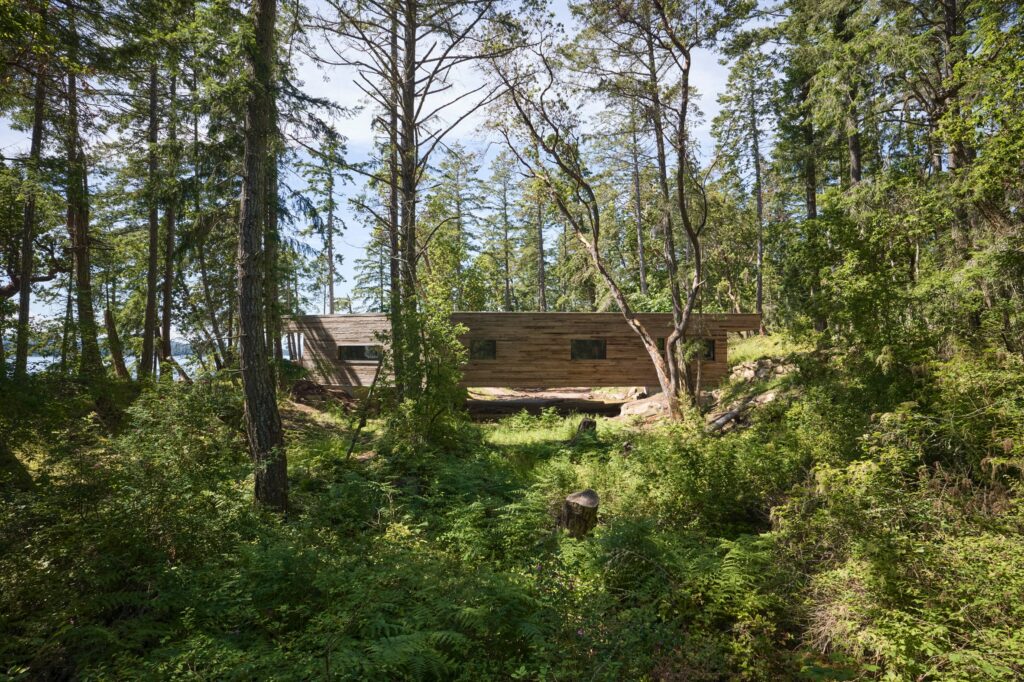
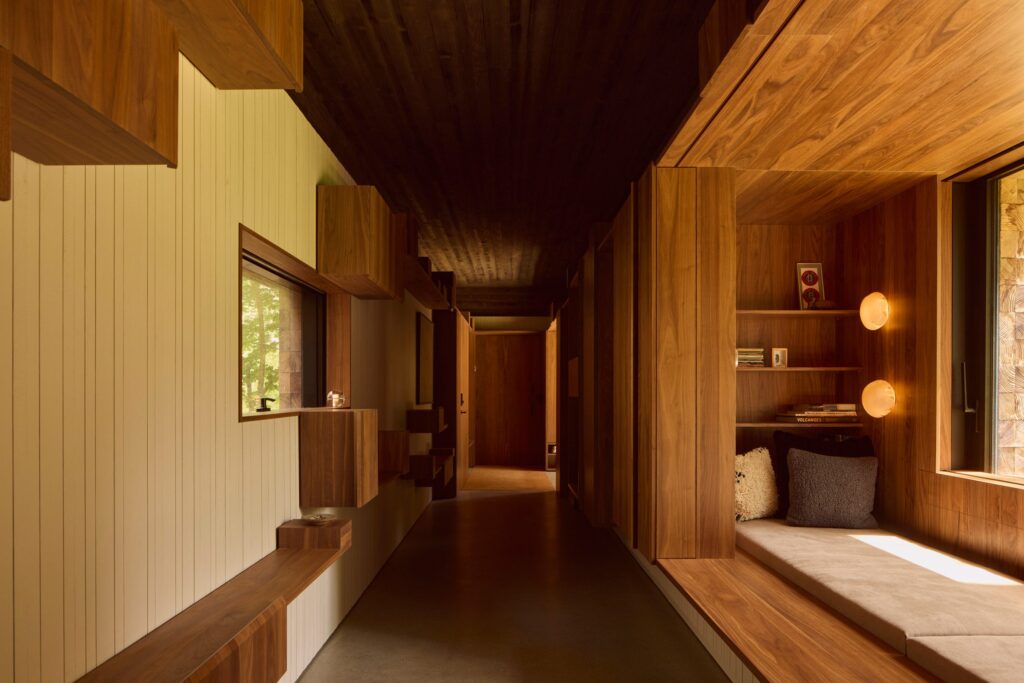
Entering the home is an experience in itself. Occupants cross a forested pathway to reach an embedded front entrance, which opens onto a spectacular 82-foot-long corridor.
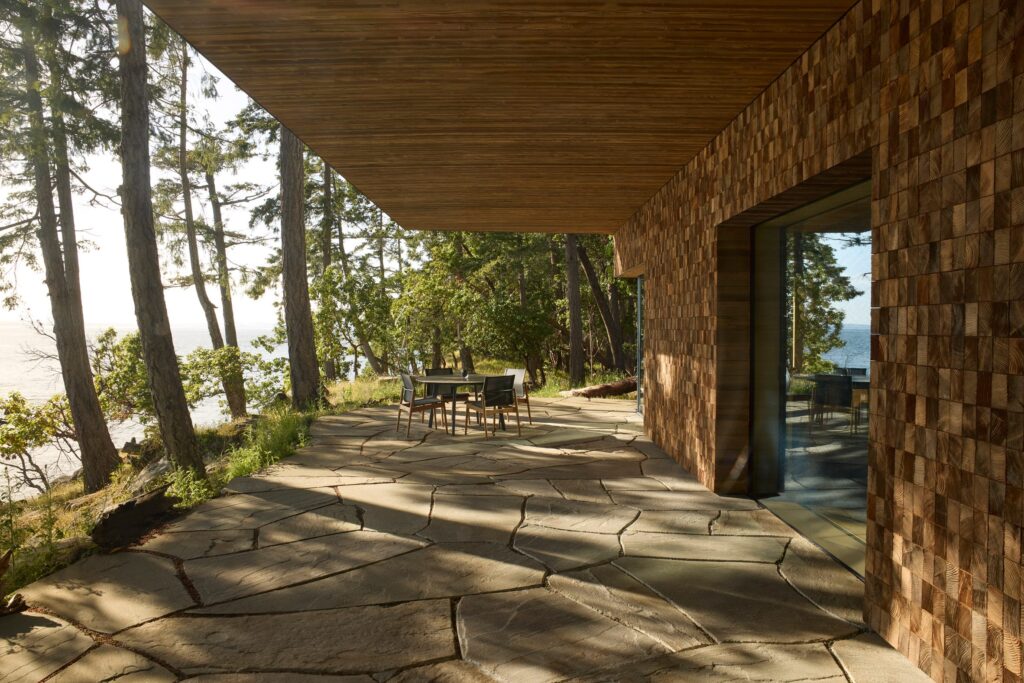
This isn’t just a hallway; it is a viewing platform featuring a window seat that overlooks the lush fern gully beneath the house.
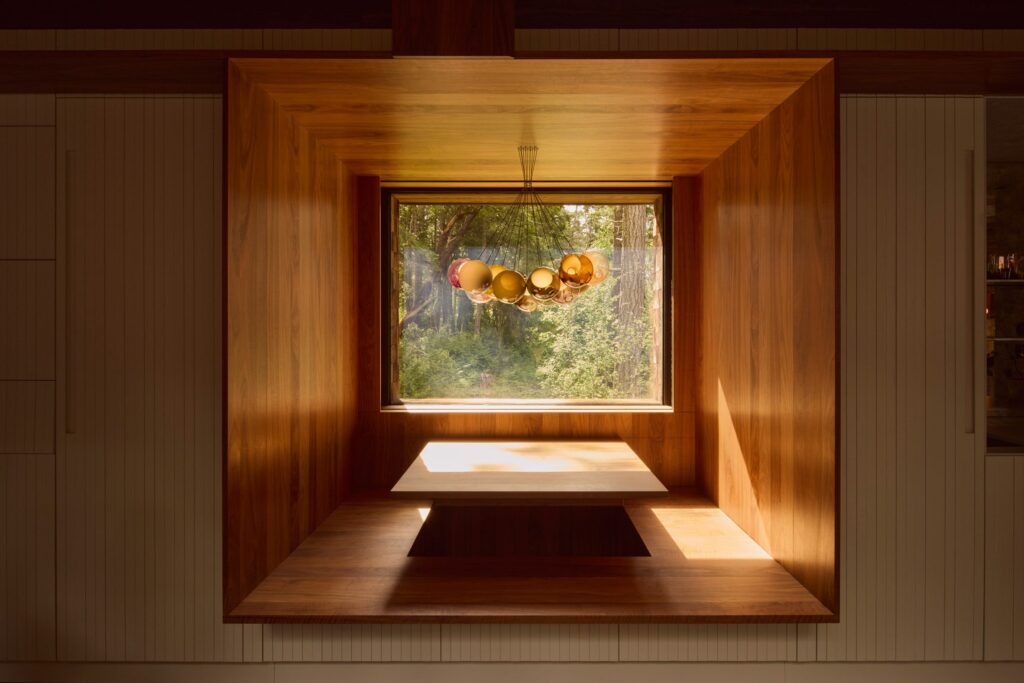
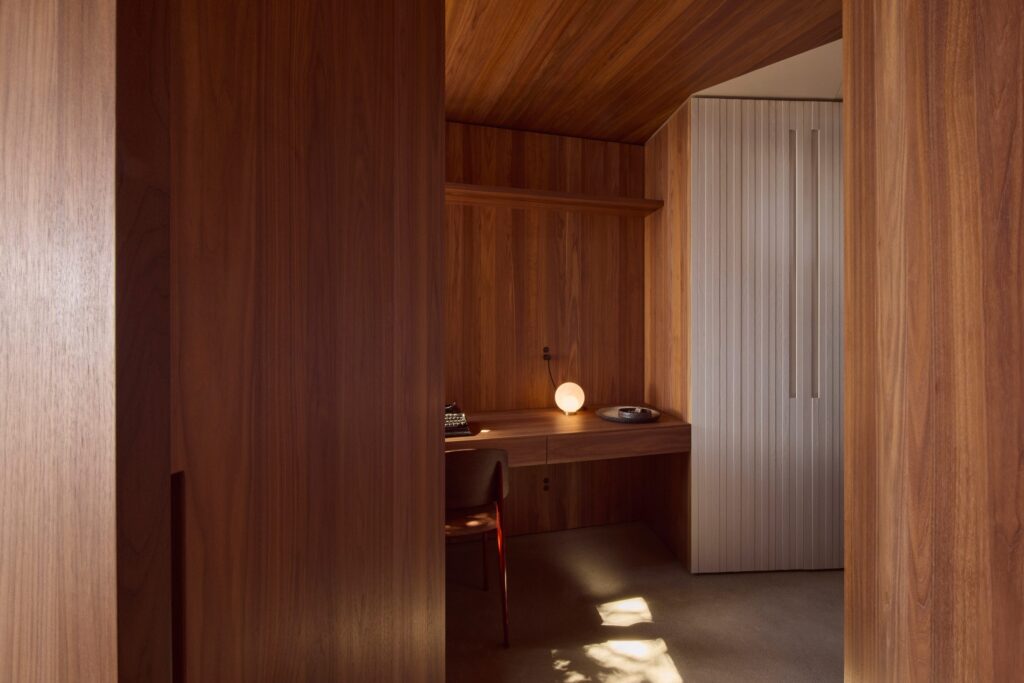
This axis serves as the spine of the home, separating the guest wing—which can be closed off when not in use—from the main living areas.
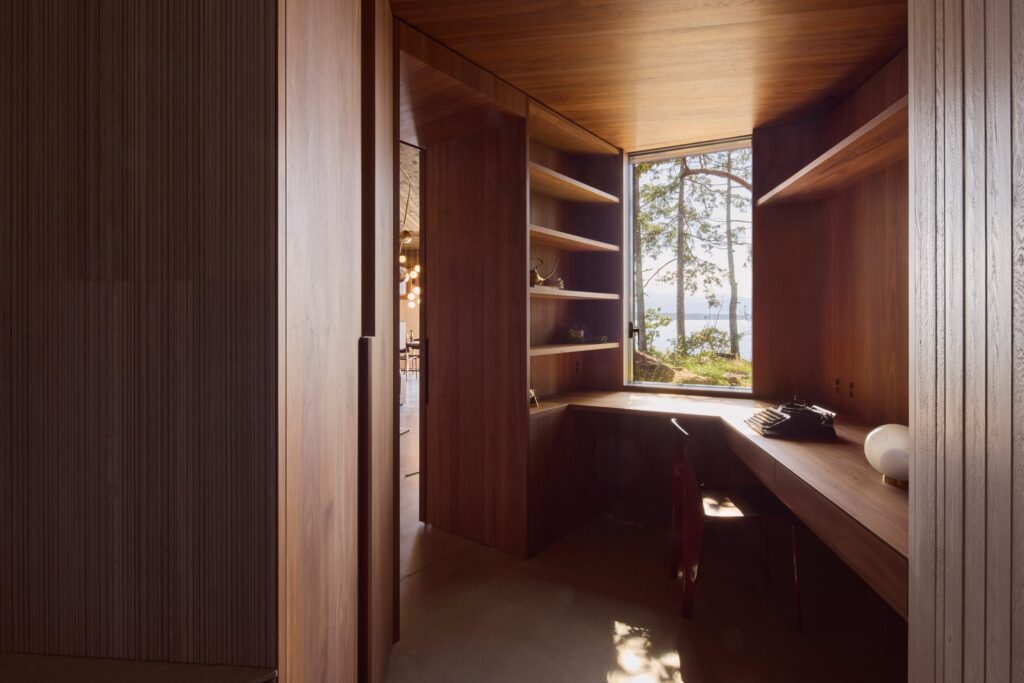
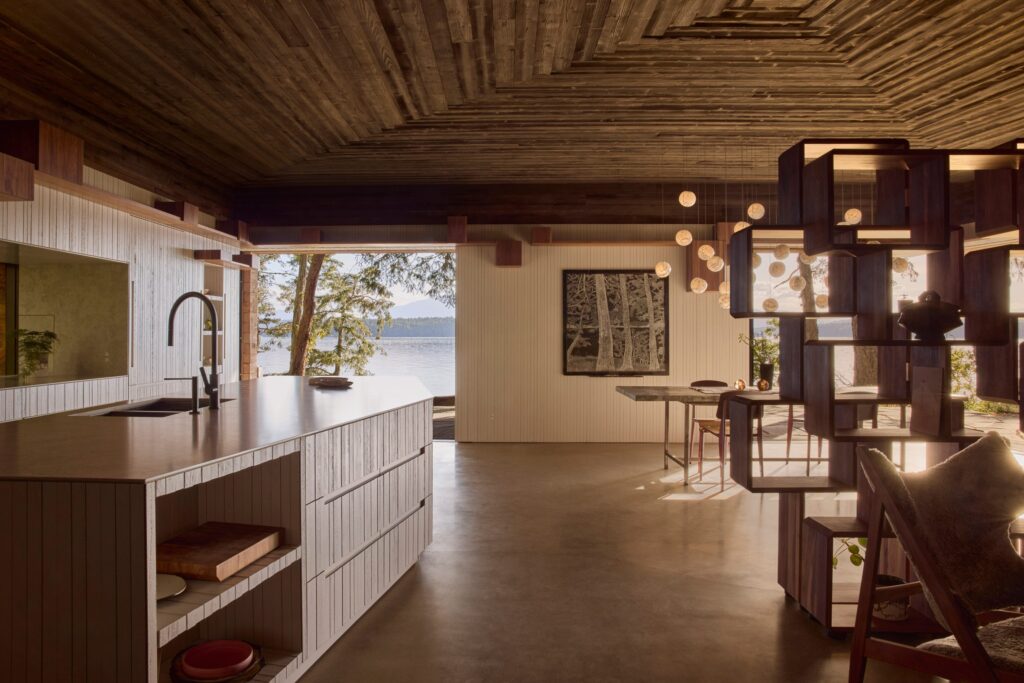
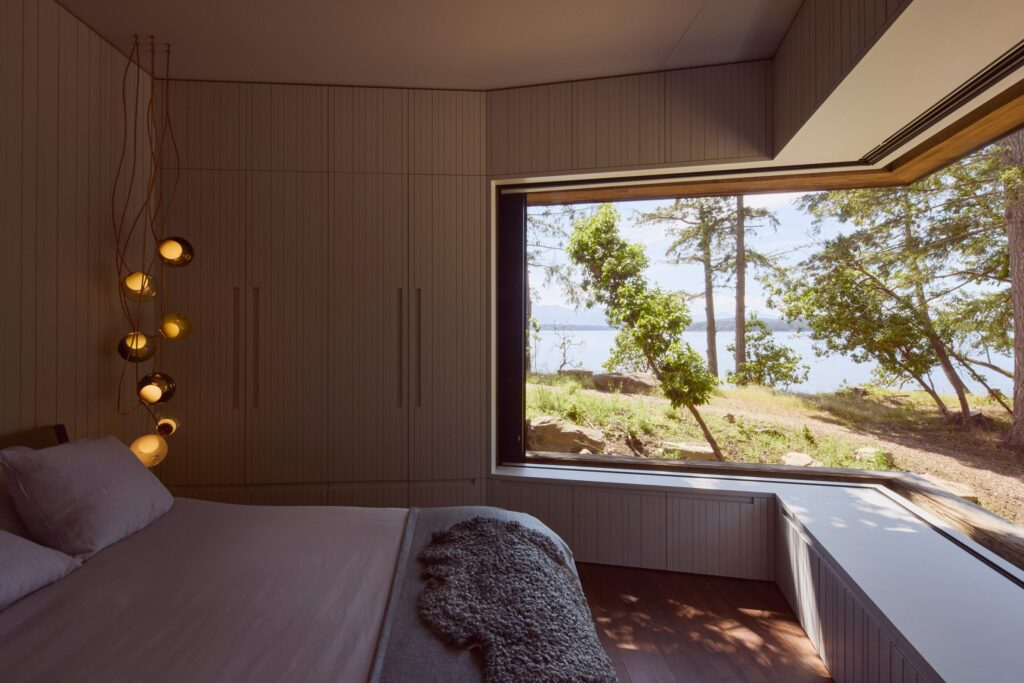
In the main wing, the house opens up to embrace the ocean views. The open-plan kitchen and living room are bathed in natural light, while the primary bedroom is cantilevered from the main volume, creating the sensation of floating amongst the canopy.
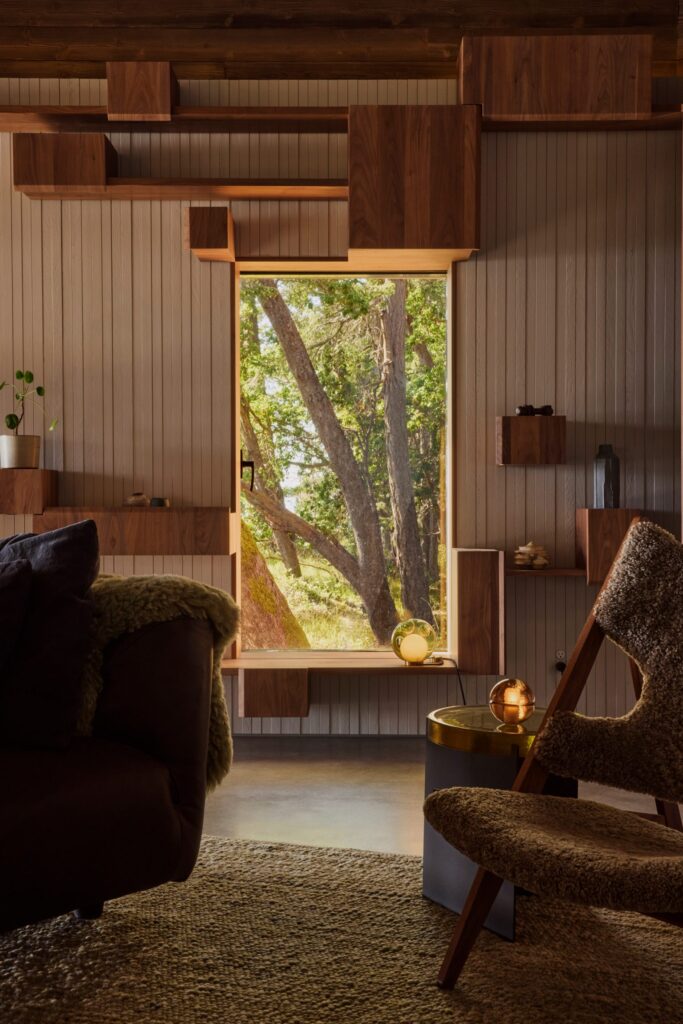
The material palette inside is a sophisticated continuation of the exterior’s rugged charm. Polished concrete floors provide a cool, industrial contrast to the warmth of the walls and cabinetry, which feature layers of painted wooden battens, Douglas fir strips, and rich walnut shelving.
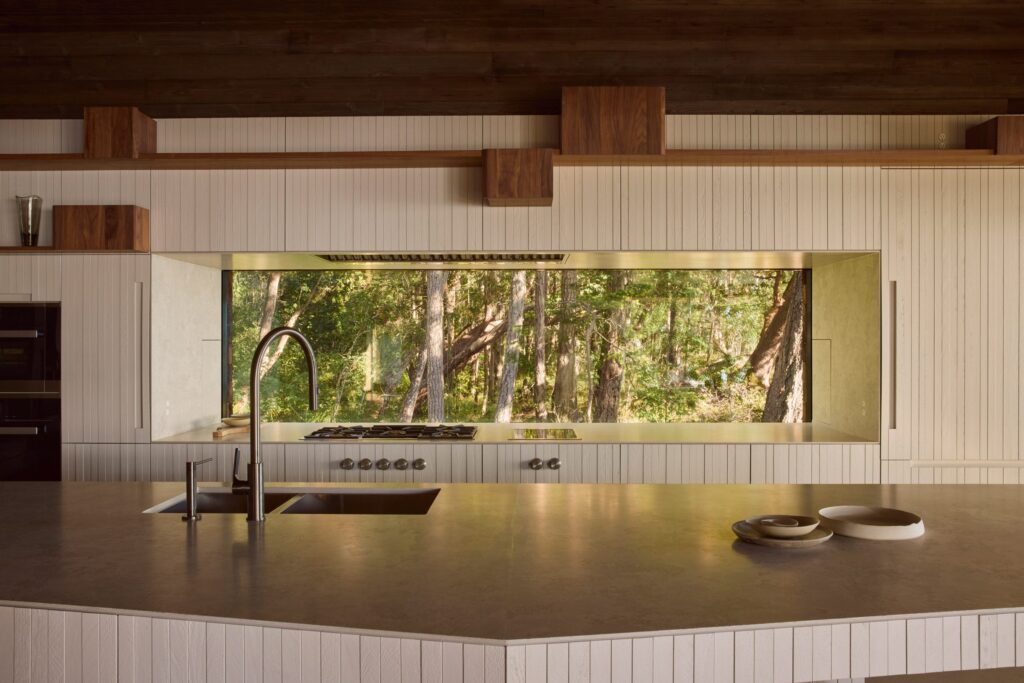
Above, the ceiling is crafted from stained, sandblasted cedar, wrapping the inhabitants in wood and reinforcing the feeling of being inside a very high-end, very thoughtfully designed treehouse.
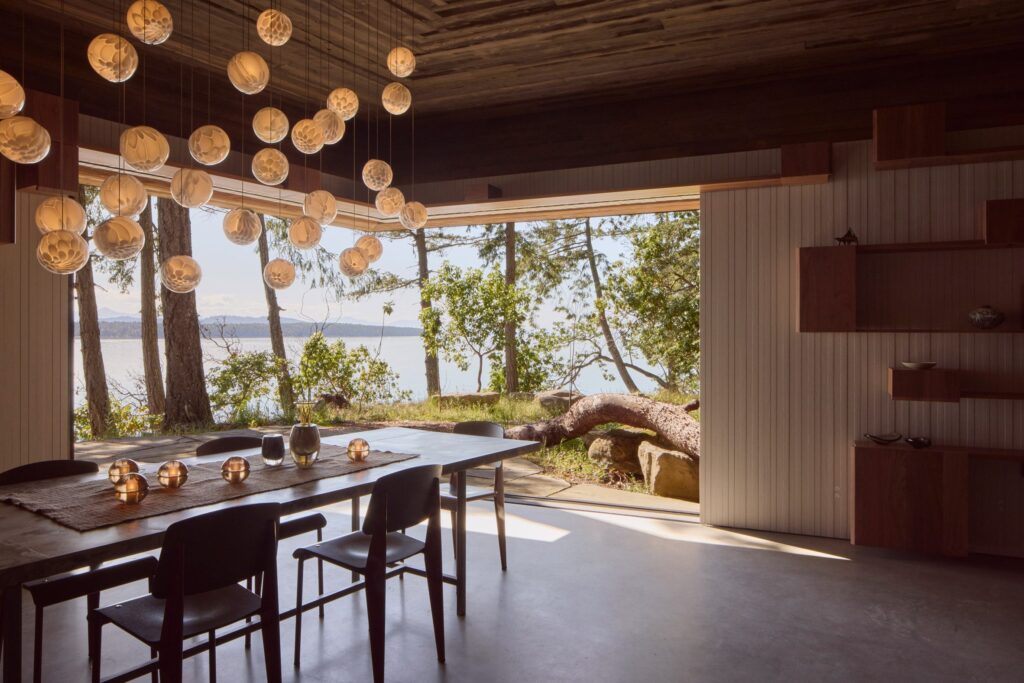
The 91.0 House acts as a “focusing device” for the environment, directing the eye to the moss, the rocks, and the water. It is Omer Arbel’s distinctive take on the North American cabin—a retreat that doesn’t retreat from the elements, but elevates you right into the heart of them.